Commercial LED Lighting in Dallas & Texas: A Buyer's Guide to Choosing the Right LED Partner
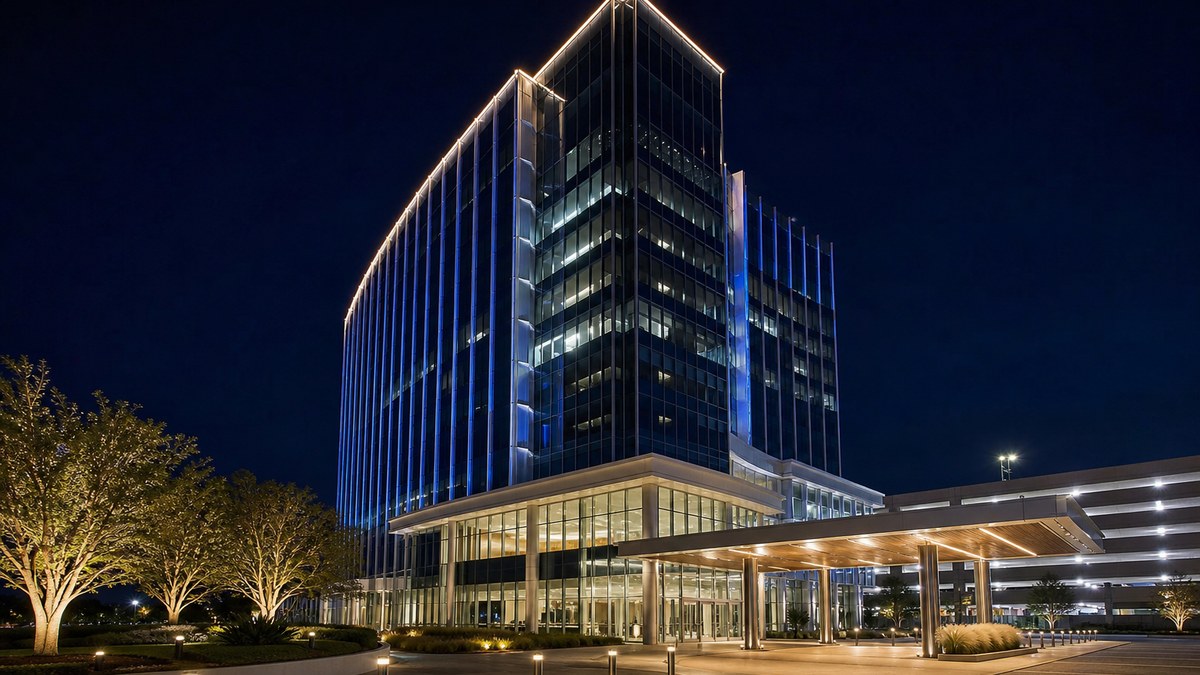
Commercial LED lighting in Dallas and across Texas is bought very differently from a box of lamps at a hardware store. A building owner searching for a "commercial LED manufacturer in Dallas" or "LED lighting solutions in Dallas" is usually not looking for a factory at all. They are looking for a partner who can recommend the right fixtures, prove they meet code and utility program requirements, install them safely, set up the controls, and stand behind the result for years. Choosing that partner well is the single biggest factor in whether an LED project delivers better light, lower operating costs, and fewer headaches.
This buyer's guide is written for property owners, facility managers, developers, contractors, and procurement teams in Dallas, Irving, Las Colinas, Fort Worth, and the rest of Texas. It explains the difference between manufacturers, distributors, contractors, and design-build lighting firms; the specifications and certifications that separate commercial-grade LED from bargain products; what Texas heat, storms, and energy codes demand; how controls fit in; and the questions to ask before you sign anything. We are based in Irving, in the middle of the Dallas–Fort Worth metroplex, and this is the same checklist we walk through with clients on every project.
The best commercial LED lighting partner in Dallas or Texas is one that matches the project, not just the product: someone who can assess the site, specify certified fixtures, handle controls and code, install safely, and support the system after turnover.
- Know who you are buying from: manufacturer, distributor, electrical contractor, or design-build lighting firm
- Check the specs: UL or ETL listing, DLC qualification where programs require it, LM-79 and LM-80 test data, CRI, color temperature, and driver quality
- Plan for Texas conditions: heat-rated drivers, surge protection, sealed exterior fixtures, and UV-stable finishes
- Include controls: sensors, dimming, and scheduling are often required by energy code and drive most of the savings
- Get warranties in writing: fixtures, drivers, and labor, and who honors them
- Incentives: projects may qualify for Oncor programs depending on program availability
- Pricing: quoted per project after a site review
Manufacturer, distributor, contractor or design-build?
The commercial LED market has several kinds of companies, and many of them describe themselves with the same words. Understanding who does what helps you compare proposals fairly and avoid gaps in responsibility.
| Type of company | What they do | What to watch for |
|---|---|---|
| Manufacturer | Designs and builds fixtures, publishes test data, issues the product warranty | Usually sells through reps and distributors; rarely handles design, installation, or controls programming on your site |
| Distributor / supplier | Stocks and sells fixtures from many brands; may offer layouts and rebate paperwork | Product-focused; installation and long-term service are someone else's job |
| Electrical contractor | Installs fixtures and wiring to code with licensed electricians | Often installs what is specified; may not lead lighting design, aesthetics, or controls strategy |
| Design-build lighting firm | Assesses the site, designs the lighting, specifies products, coordinates licensed installation, programs controls, and supports the system | Ask how installation is staffed and licensed, and who handles warranty claims |
| Online LED retailer | Ships product directly to buyers | No site assessment, design, or local support; certifications and warranties vary widely |
For a straight lamp swap in a small space, buying product and hiring an electrician can work. For anything involving multiple spaces, exterior lighting, controls, code compliance, or appearance that matters to tenants and guests, a single accountable partner usually reduces risk. That is the model we use at Irving LED Lights: we bring 15+ years as an authorized architectural lighting dealer and project coordinator, and installation is handled by licensed professionals.
When two proposals look very different, check whether they cover the same scope. One may include design, controls programming, permits, disposal of old fixtures, and night aiming; another may be fixtures only. Ask every bidder to list exactly what is included and what is excluded.
What makes LED commercial grade?
Two LED fixtures can look identical on a spec sheet summary and perform very differently after a few Texas summers. These are the details that matter most.
Safety listing
Commercial fixtures should carry a recognized safety listing such as UL or ETL for the intended location (dry, damp, or wet). Inspectors and insurers expect it, and unlisted products can create problems at inspection or after an incident.
DLC qualification
The DesignLights Consortium (DLC) maintains Qualified Products Lists for commercial LED lighting. Many utility efficiency programs use DLC qualification as an eligibility requirement, so if you hope to apply for an incentive, confirm that the specific model numbers are listed before you order.
Test data: LM-79, LM-80 and TM-21
LM-79 reports measure a complete fixture's light output, efficacy, and color. LM-80 data and TM-21 projections describe how the LED light source maintains its output over time. A reputable supplier can provide these documents on request. If a supplier cannot, treat lifetime claims with caution.
Color quality
Color rendering index (CRI) describes how naturally colors appear; color temperature (CCT) describes whether light looks warm or cool. Offices, retail, hospitality, and healthcare spaces usually benefit from higher CRI. Consistent color between fixtures also matters, because mismatched whites across a lobby or storefront are obvious to everyone.
Drivers and dimming
The driver is the electronics that power the LEDs, and it is the component most likely to fail early. Look for quality drivers rated for the expected temperatures, smooth dimming down to low levels, and compatibility with the control system you plan to use (0-10V, DALI, or networked wireless).
Optics and glare control
Good optics put light where it is needed and keep it out of eyes, screens, and neighboring properties. Ask about glare ratings, beam distributions, and shielding, especially for offices, parking, and exterior site lighting.
Spec checklist at a glance
| Item | Why it matters | What to ask for |
|---|---|---|
| UL / ETL listing | Safety and inspection approval | Listing for dry, damp, or wet location as installed |
| DLC qualification | Often required for utility incentives | Exact model numbers on the DLC Qualified Products List |
| LM-79 report | Verifies delivered light and efficacy | Report for the fixture actually being quoted |
| LM-80 / TM-21 | Supports lumen maintenance claims | Source data and projection at your operating temperature |
| CRI and CCT | Color appearance and comfort | Values per space type and color consistency tolerance |
| Driver | Reliability and dimming quality | Temperature rating, dimming range, control protocol |
| Surge protection | Storm resilience outdoors | Surge rating for exterior and pole fixtures |
| Ingress protection | Rain, dust, and irrigation | IP rating for exterior and wash-down areas |
| Warranty | Long-term risk | Written terms for fixtures, drivers, and labor |
Built for Texas conditions
Texas is hard on lighting. Long, hot summers stress drivers and electronics; spring storms bring lightning, hail, and power surges; and sun exposure fades finishes and yellows cheap lenses. Commercial LED equipment for Dallas–Fort Worth and the rest of the state should be specified with that in mind:
- Heat: drivers and fixtures rated for high ambient temperatures, good heat sinking, and attention to fixtures in hot attics, canopies, and enclosed signs.
- Storms and surges: surge protection on pole lights, wall packs, and exterior circuits, and solid grounding.
- Rain and irrigation: sealed, wet-rated exterior fixtures with proper ingress protection, and drainage for in-grade lights.
- UV exposure: UV-stable finishes, lenses, and cable jackets for anything outdoors.
- Wind: poles, brackets, and mounting checked for wind loading, especially when replacing heavy old fixtures with new heads.
For exterior work specifically, see our guide to commercial outdoor LED lighting for facades and parking and our guide to parking garage LED lighting.
Controls are part of the LED decision
Switching to LED fixtures is only half of a modern lighting upgrade. Controls such as occupancy and vacancy sensors, daylight dimming, scheduling, and high-end trim are where much of the ongoing energy savings comes from, and in many cases they are required by the energy code when lighting is replaced or a space is renovated.
- 0-10V dimming is simple and widely compatible.
- DALI provides addressable, two-way control for larger or more complex spaces.
- Networked lighting controls, wired or wireless, add zoning, scheduling, and reporting across a building or campus.
- Exterior controls such as photocells, astronomical time clocks, and overnight dimming keep site lighting efficient.
Our commercial lighting control systems guide covers the options in depth, and our lighting controls and energy code guide explains IECC and ASHRAE 90.1 requirements and what inspectors look for.
Planning an LED project in Dallas–Fort Worth?
Tell us about your building and we will follow up to schedule a site review and prepare a project-specific proposal.
Energy codes, permits and incentives in Texas
Texas sets a statewide minimum commercial energy code, and individual cities can adopt and amend newer editions. That means the lighting power and control requirements for a renovation in Dallas, Irving, Fort Worth, or Plano can differ, and requirements change as cities update their codes. A qualified partner should confirm the edition in force with the local building department before finalizing a design.
Permits are commonly required for new circuits, new poles, exterior lighting changes, and larger renovations, while like-for-like replacements may be handled differently. Again, the city has the final word, and a good partner will tell you when a permit is needed rather than guessing.
On incentives, many commercial customers in the Dallas–Fort Worth area are served by Oncor, which offers commercial energy efficiency programs. Projects may qualify for Oncor incentives depending on program availability, project scope, and product eligibility. Program rules, deadlines, and pre-approval steps matter, so check eligibility before you buy fixtures.
Any project that touches corridors, stairs, and exits should also review emergency and egress lighting. Our emergency and egress lighting guide covers the code basics, battery and generator options, and testing.
Retrofit, relamp or new fixtures?
There are three common paths for existing buildings, and the right one depends on the condition of the current fixtures, ceilings, and wiring.
| Approach | Best for | Trade-offs |
|---|---|---|
| LED lamps (relamp) | Quick changes where existing fixtures are in good condition | Least disruption; limited control options and depends on old fixture housings |
| Retrofit kits | Troffers and high bays with sound housings and ceilings | New optics and drivers without ceiling work; must be listed for the retrofit |
| New fixtures | Renovations, failing housings, new layouts, or design upgrades | Best performance and appearance; more installation work |
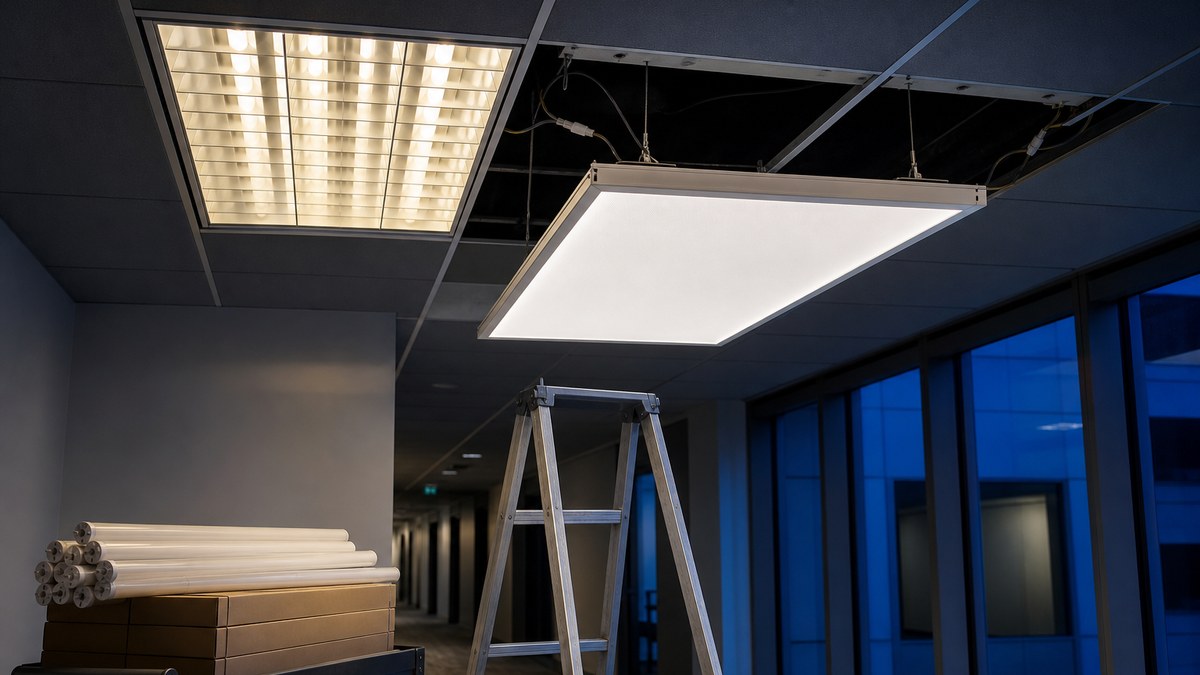
Our guide to budget-smart commercial LED upgrades explains how to phase these options so the money goes where it makes the most difference.
Commercial LED by property type
Offices and corporate campuses
Low-glare tenant lighting, lobbies that make a strong first impression, and controls that meet code. See office lighting upgrades for Class A buildings and our Las Colinas commercial LED guide.
Warehouses and logistics
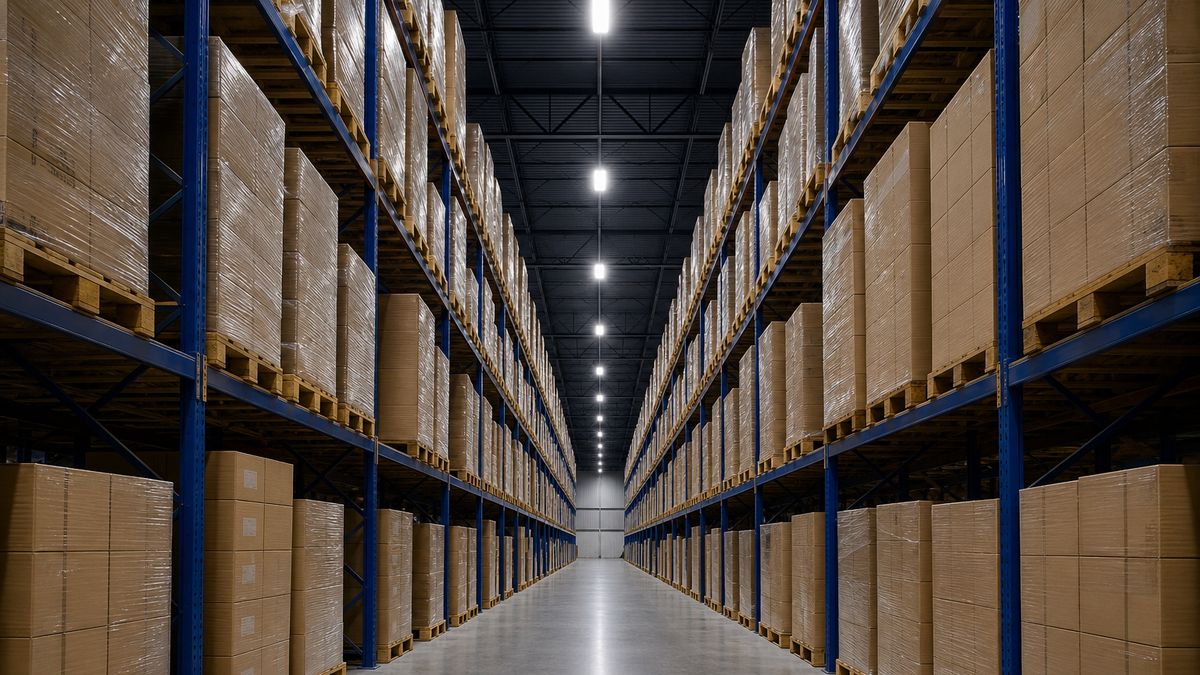
High bays with aisle optics, sensors that dim empty aisles, and well-lit docks and truck courts. See warehouse and logistics lighting near DFW Airport.
Data centers and mission-critical sites
Even, low-maintenance lighting for white space, network operations rooms, and secure perimeters. See data center lighting.
Hotels, restaurants and entertainment
Warm, dimmable, layered light for lobbies, ballrooms, dining rooms, bars, and patios. See hotel lighting and restaurant and entertainment lighting.
Retail and shopping centers
High-CRI interiors, bright and even canopies, and parking lots that feel safe. See retail and shopping center LED lighting.
Grounds and exteriors
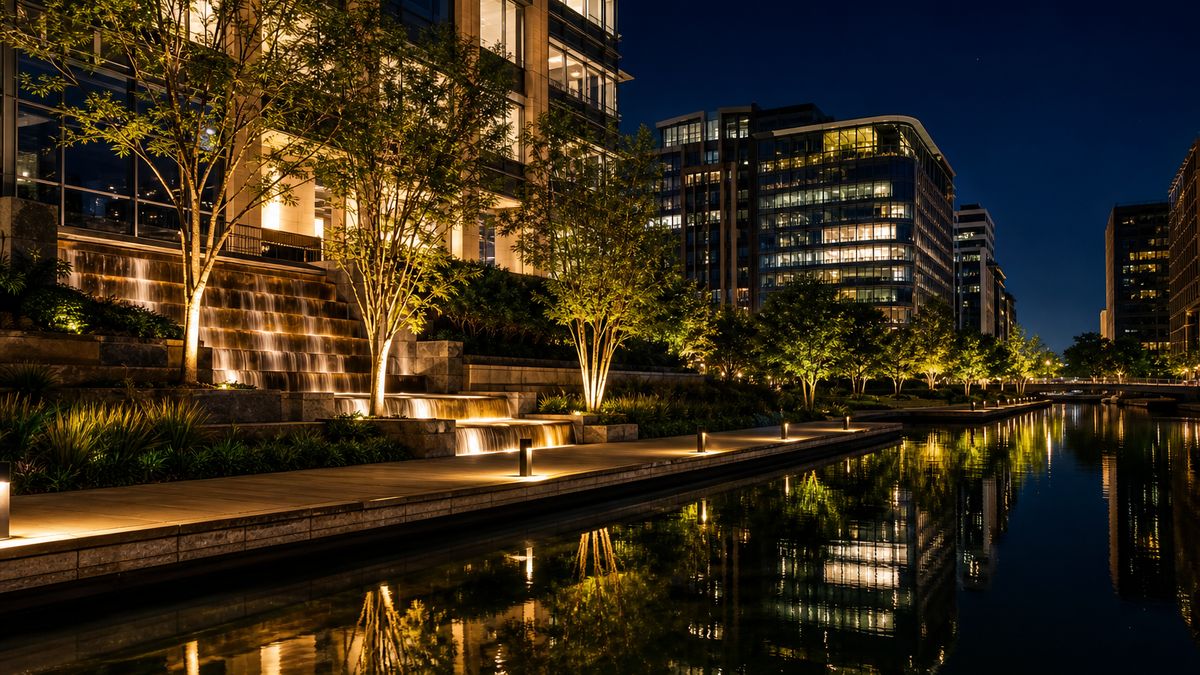
Facades, landscape, and site lighting that ties the property together after dark. See commercial landscape lighting.
Beyond fixtures: video walls and signage
Many commercial LED projects in Dallas and Texas include more than general lighting. Lobbies and conference rooms increasingly feature direct-view LED video walls, and retail and mixed-use properties rely on illuminated signage. Planning these alongside the lighting avoids conflicts in power, structure, glare, and controls. See our guides to LED video walls in Irving and LED video walls across DFW, and our video wall services.
Questions to ask any commercial LED provider
- Who designs, who supplies, and who installs? Get names of the responsible parties and how installation is licensed.
- Will you visit the site? A proposal without a site review is a guess about ceilings, wiring, controls, and access.
- Which exact products are you quoting? Ask for model numbers, cut sheets, listings, and test data.
- Do the products and controls meet the energy code in force here? Ask how compliance will be documented.
- Will this project qualify for any utility programs? And who prepares the paperwork, before or after purchase?
- What are the warranty terms? Fixtures, drivers, controls, and labor, and who handles claims.
- How will you minimize disruption? After-hours work, phasing by floor or zone, and protection of finishes.
- Who programs and commissions the controls? And will our team be trained on them?
- What happens after turnover? Ask about maintenance, spare parts, and response for service calls.
- Can you show relevant experience? Ask about similar project types and the team's background.
Red flags to avoid
- Lifetime or savings promises without data. Claims should be backed by test reports and a clear calculation method.
- Unlisted or unbranded fixtures. Missing safety listings can stop an inspection and complicate insurance.
- No mention of controls or code. A lighting replacement that ignores required controls can fail inspection or miss most of the savings.
- Vague warranties. "Five-year warranty" means little if it is unclear who honors it and what it covers.
- One-size-fits-all color. The same cool white in every space usually looks harsh in hospitality, retail, and lobbies.
- Pressure to sign before a site visit. Real conditions on site change the right answer.
How a commercial LED project runs
- Discovery. Goals, problem areas, schedules, budgets, and any tenant or brand requirements.
- Site review. Existing fixtures, ceilings, circuits, controls, light levels, and access, including a night walk for exteriors.
- Design and specification. Layouts, product selections, controls strategy, and code review.
- Proposal. A clear scope and project-specific price, with options where they make sense.
- Incentive check. Program eligibility and any pre-approval steps before ordering.
- Procurement and scheduling. Lead times, staging, and phasing to keep the building running.
- Installation. Licensed installation, safe removal and disposal of old equipment, and protection of finishes.
- Commissioning. Aiming, controls programming, sensor tuning, and verification.
- Turnover and support. Documentation, training, warranty registration, and ongoing service.
Serving Dallas, Irving and the rest of Texas
From Irving we work across the Dallas–Fort Worth metroplex, including Dallas, Las Colinas, Valley Ranch, Coppell, Grapevine, Grand Prairie, Arlington, Fort Worth, Plano, Richardson, Frisco, and McKinney, and we coordinate larger projects elsewhere in Texas. See our service areas and our guide to commercial LED lighting in Coppell and Valley Ranch. For Dallas-based projects you can also visit our network partner for Dallas commercial LED lighting, and for statewide portfolios, Texas LED lighting.
Why work with Irving LED Lights
We design, specify, coordinate, install, program, and support commercial lighting, so one team is accountable from the first site walk to long after turnover. Our team brings 15+ years as an authorized architectural lighting dealer and project coordinator. Our licensed installation partner has completed over 200 major sports and commercial projects across the US and Canada — NFL, NBA, NHL, MLS, NCAA and NASCAR. Learn more about us, explore our commercial lighting services and service overview, or see how our Luminance design-build program handles complete lighting transformations.
Frequently Asked Questions
Do I need a commercial LED manufacturer in Dallas, or a lighting contractor?
How much does commercial LED lighting cost in Dallas or Texas?
What certifications should commercial LED fixtures have?
What is the DLC Qualified Products List?
Are there incentives for commercial LED lighting in the Dallas area?
Do lighting upgrades in Texas need to meet the energy code?
Should I use retrofit kits or new LED fixtures?
What makes LED fixtures suitable for Texas heat and storms?
Which areas of Texas do you serve?
How do I get a quote?
Get the right LED partner from day one
Request a consultation and we will follow up to schedule a site review anywhere in Dallas–Fort Worth.
Related
Our DFW lighting network: Dallas commercial LED lighting, Fort Worth LED lighting, Arlington LED lighting, Plano LED lighting, statewide Texas LED lighting, LED signage and video displays, wholesale LED components, fiber optic starlight ceilings, 360° laser fiber optic lighting, modular building solutions, and Dallas modular structures.