LED Video Walls in Irving, TX: Lobbies, Conference Rooms, Hotels & Event Spaces
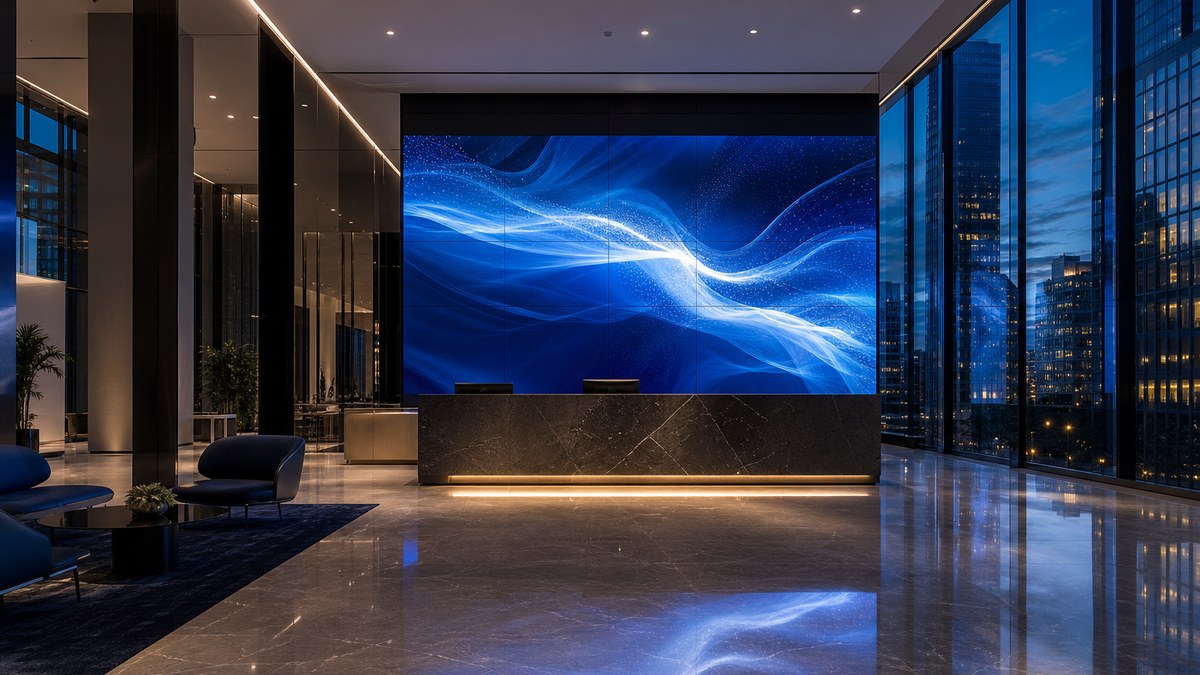
LED video walls in Irving have moved from a luxury feature to a practical tool for corporate lobbies, conference centers, hotels, churches, and entertainment venues. A well-specified direct-view LED wall is seamless, bright, and vivid, it fits almost any size or shape, and it can show brand stories, live data, presentations, and events in a way that a cluster of TVs never will. Across Las Colinas, the Urban Center, Valley Ranch, and the DFW Airport corridor, property owners and tenants use video walls to make a first impression, keep people informed, and turn ordinary walls into experiences.
This guide explains how commercial LED video walls work, how to choose pixel pitch and size for your space, the difference between LED and LCD walls, what to know about brightness, mounting, power, control and content, and how a typical project in Irving is planned and installed. It is written for facility managers, corporate real estate teams, hotel operators, AV and IT leads, architects, and church and venue managers who want to get the specification right the first time.
An LED video wall is a large, seamless display built from LED cabinets or modules. Choosing the right one comes down to a few decisions:
- Pixel pitch: match it to the closest normal viewing distance; finer pitch for close viewing
- Size and shape: fit the wall, sightlines, and content, including curves and corners
- Brightness: moderate for interior rooms, higher for sunlit atriums and windows
- Mounting and service: front-serviceable systems suit wall-flush lobby installs
- Control and content: a video processor, sources, and a simple way to schedule content
- Support: calibration, spare modules, and a maintenance plan
- Pricing: quoted per project after a site review — call (702) 738-2218
What is an LED video wall?
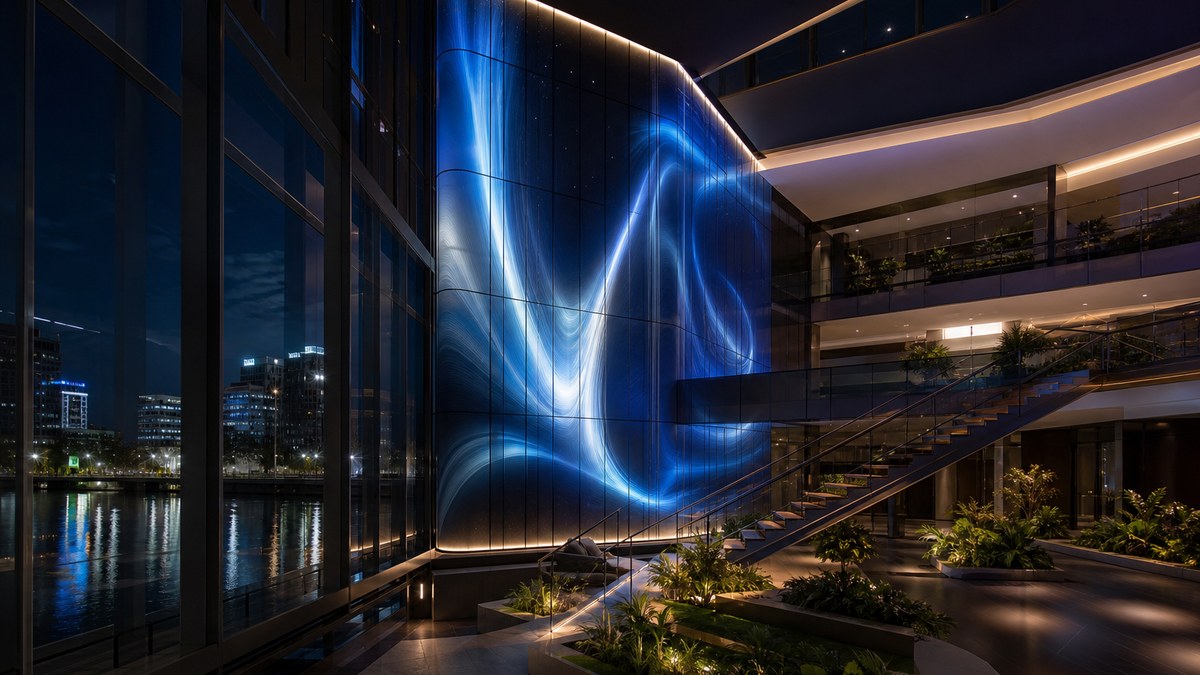
A direct-view LED video wall is made of small LED modules mounted into cabinets, which are joined together into one continuous screen. Each pixel is a cluster of red, green, and blue LEDs that emits its own light, so there is no backlight and no bezel. Because the wall is built from modules, it can be almost any size or aspect ratio: a widescreen wall behind a reception desk, a tall column in an atrium, a curved wall in a briefing center, or a ribbon that wraps a corner.
The wall is driven by a video processor that takes inputs from computers, media players, cameras, and conferencing systems and maps them across the full canvas. A content management system schedules what plays when. Together, the display, processor, and control software make up the video wall system, and all three need to be planned together.
Why Irving businesses invest in video walls
- First impressions: a lobby wall tells visitors who you are before anyone says a word.
- Brand storytelling: product launches, culture videos, and campaigns at architectural scale.
- Communication: live dashboards, wayfinding, event schedules, and announcements.
- Collaboration: conference rooms and briefing centers that show several sources at once.
- Hospitality and events: ballrooms, pre-function spaces, and lobbies that can change looks for every event.
- Worship and venues: lyrics, sermons, IMAG camera feeds, and stage backdrops.
- Tenant attraction: amenity-rich Class A buildings use digital features to stand out.
In a market like Las Colinas, where corporate campuses, hotels, and mixed-use developments compete for attention, a well-placed video wall is part of the building's identity as much as its facade lighting or landscape.
LED vs LCD video walls
Many buyers start by comparing direct-view LED with tiled LCD panels. Both have a place, and the right choice depends on size, viewing distance, ambient light, and how the wall will be used.
| Factor | Direct-view LED wall | Tiled LCD wall |
|---|---|---|
| Seams | Seamless image, no bezels | Visible bezel lines between panels |
| Size and shape | Almost any size, curves, corners and custom ratios | Fixed panel sizes in a grid |
| Brightness | Wide range, suits bright atriums and windows | Good for typical interior rooms |
| Viewing angle | Very wide, consistent color off-axis | Narrower; can shift at extreme angles |
| Close-up detail | Depends on pixel pitch; fine pitch for close viewing | Very sharp at close range |
| Depth and mounting | Slim cabinets, front-service options for flush walls | Slim, but needs access for panel service |
| Best fit | Lobbies, atriums, ballrooms, stages, large feature walls | Control rooms, small meeting rooms, close-range data walls |
For most lobbies, atriums, ballrooms, worship spaces, and feature walls, direct-view LED is the stronger choice because the image is seamless and it can be sized and shaped to the architecture. LCD still makes sense for tight, close-range applications. We are happy to compare both for your space before you decide.
Pixel pitch and viewing distance
Pixel pitch is the distance between the centers of neighboring pixels, measured in millimeters. A smaller number means pixels are closer together, which gives a sharper image up close. Pitch is the single biggest decision in a video wall, because it drives image quality, resolution, and the overall investment.
A common industry rule of thumb is roughly one meter of comfortable viewing distance for every millimeter of pitch, so a 1.5 mm wall looks smooth from about 1.5 meters away and beyond. It is a starting point, not a law: content type, viewer expectations, and how close people actually stand all matter.
| Typical pitch range | Closest normal viewing | Common Irving applications |
|---|---|---|
| Below 1.5 mm (fine pitch) | Very close: a meter or two | Boardrooms, executive briefing centers, broadcast-style studios |
| About 1.5 to 2.5 mm | A few meters | Corporate lobbies, reception walls, conference centers, retail |
| About 2.5 to 4 mm | Several meters | Hotel ballrooms, atriums, worship stages, event spaces |
| Above 4 mm | Long distances | Large venues, high walls, building exteriors |
Measure from where people actually stand or sit, not from the back of the room. If a receptionist desk sits a few feet from the wall, that closest point decides the pitch. If the closest viewers are across a large atrium, a coarser pitch may look just as good and leave room in the plan for a larger canvas.
Sizing the wall and its resolution
Size and pitch together set the wall's native resolution. A large wall with a fine pitch can exceed 4K, while a smaller wall with a coarser pitch may sit below HD. That is not a problem as long as content is created for the real canvas. Good practice includes:
- Start from the content. Will the wall show full-screen video, slides, data, or several windows at once?
- Respect sightlines. The bottom of the wall should clear desks, furniture, and heads; the top should be visible without strain.
- Use the architecture. Align the wall with ceiling grids, columns, and finishes so it looks built-in.
- Plan the aspect ratio. Standard 16:9 walls simplify content; panoramic and vertical walls create drama but need custom content.
- Think about curves and corners. Flexible and corner modules allow wraps, columns, and ribbons.
Brightness, contrast and color
LED walls can be very bright, and more is not always better. Indoor walls in typical lobbies and meeting rooms run comfortably at moderate brightness, often dimmed well below their maximum. Glass-walled atriums and window-facing displays that compete with Texas sun need high-brightness products. Outdoor displays need far more output and weatherproof cabinets, and fall closer to signage than interior AV.
Beyond brightness, look at:
- Contrast: darker module surfaces and black LED packages give deeper blacks and richer images.
- Grayscale and low-light performance: smooth gradients at reduced brightness matter in lobbies that are dimmed at night.
- Color uniformity: factory and on-site calibration keep every cabinet matching.
- Refresh rate: a high refresh rate reduces flicker and scan lines on phone cameras and broadcast cameras, which matters for events and worship streaming.
- Automatic brightness: ambient light sensors adjust output through the day, saving energy and keeping the image comfortable.
SMD vs COB LED technology
Most commercial walls use one of two LED packaging methods:
SMD (surface-mounted device)
Each pixel is a small package soldered to the module. SMD is proven, widely available, and serviceable, and it remains the mainstream choice for many lobby, event, and worship walls.
COB (chip-on-board)
LED chips are mounted directly on the board and sealed under a protective coating. COB gives a flat, durable surface that resists bumps and cleaning, which is helpful in public lobbies and close-viewing rooms, and it is common in fine-pitch products. Both technologies can deliver excellent results; the right one depends on pitch, location, and how much contact the wall may get.
Mounting, structure and service access
How the wall is mounted shapes the whole project:
- Wall-mounted, front-service: modules come off from the front with magnetic or vacuum tools, so the wall can sit nearly flush with the finished wall. This is the most common lobby solution.
- Rear-service: technicians work from behind the wall, which needs an access corridor but can simplify some installs.
- Freestanding or floor-supported: for open atriums, stages, and spaces where walls cannot carry the load.
- Flown or rigged: for ballrooms, stages, and venues, engineered with qualified rigging.
- Recessed niches: the cleanest look, with the wall set into a framed opening and trimmed flush.
Every installation needs a structural review of the wall or floor, coordinated blocking or steel, and clearances for ventilation. On renovations in existing Irving buildings, we coordinate early with the building engineer and general contractor so structure, power, and data are ready before the wall arrives.
Planning a video wall in Irving?
Tell us about your space and we will follow up with pitch and size recommendations and a project-specific proposal.
Power, heat and data infrastructure
A video wall is part of the building's electrical and IT systems, so it needs proper planning:
- Dedicated circuits sized for the wall's maximum draw, installed to code by licensed electricians.
- Heat management through ventilation or HVAC capacity in the room, especially for enclosed niches.
- Signal and network cabling from the processor to the wall, plus network access for monitoring and content.
- Equipment location for processors and media players, ideally in a nearby AV or IT closet.
- Surge protection and power sequencing so the wall starts cleanly and survives North Texas storms.
Day-to-day energy use depends heavily on brightness and content, and walls that are dimmed with ambient sensors and scheduled off after hours use far less than walls left at full output. We can integrate the wall's schedule with your commercial lighting control system so lobby lighting and display content work together.
Control, sources and content
Video processing
The processor scales and maps sources onto the wall, switches between inputs, and handles multi-window layouts. It should match the wall's resolution and the number of sources you need to show at once.
Sources
Typical sources include media players for scheduled content, presentation PCs, video conferencing codecs, cameras, wireless presentation systems, and live data feeds.
Content management
A content management system lets your marketing or facilities team schedule playlists, update messages, and switch layouts without calling a technician. Simple, role-based control keeps the wall fresh.
Content design
Content built for the wall's exact resolution and shape looks dramatically better than stretched TV content. Motion graphics, slow-moving brand loops, and data visualizations work best in lobbies; bold, readable layouts suit events and worship.
Plan content before you finalize the wall. A panoramic lobby wall with no content strategy becomes an expensive screensaver. A short list of everyday loops, event templates, and emergency messages keeps the wall working for you from day one.
Video walls by space type
Corporate lobbies and reception
Seamless walls behind reception desks, along elevator lobbies, or wrapping columns introduce the brand and display welcome messages, news, and culture content.
Conference rooms and briefing centers
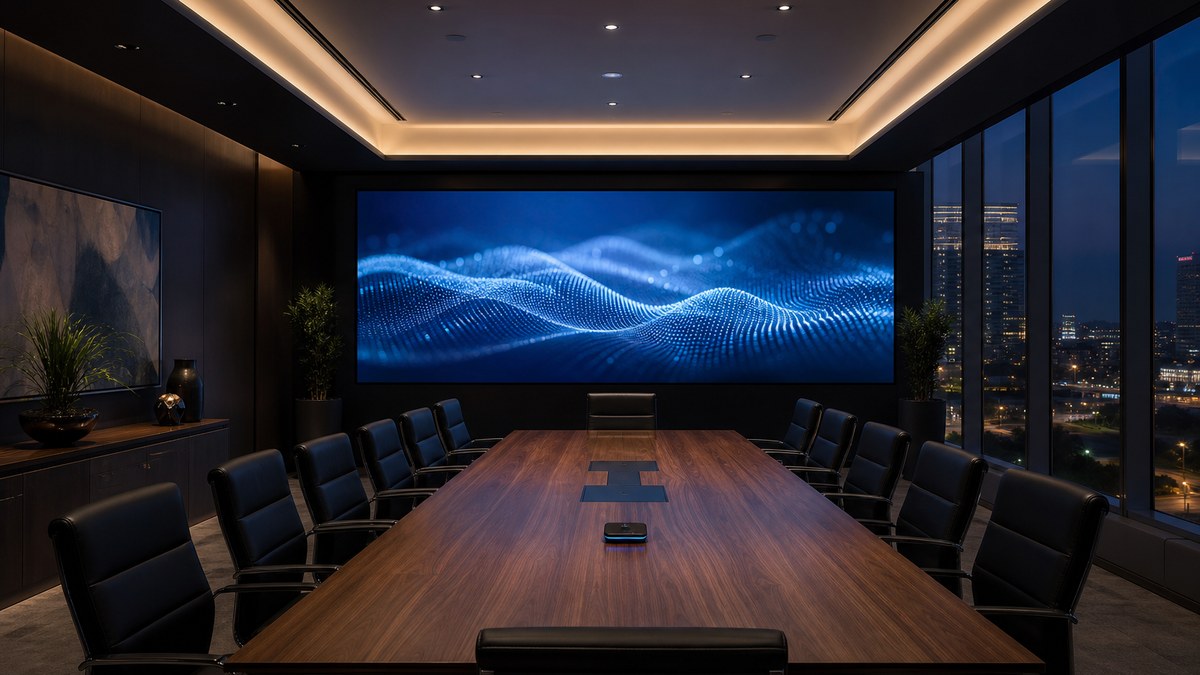
Fine-pitch walls replace projectors and multi-TV setups, showing presentations, video calls, and several sources at once with no seams through faces or spreadsheets.
Hotels, ballrooms and conference venues
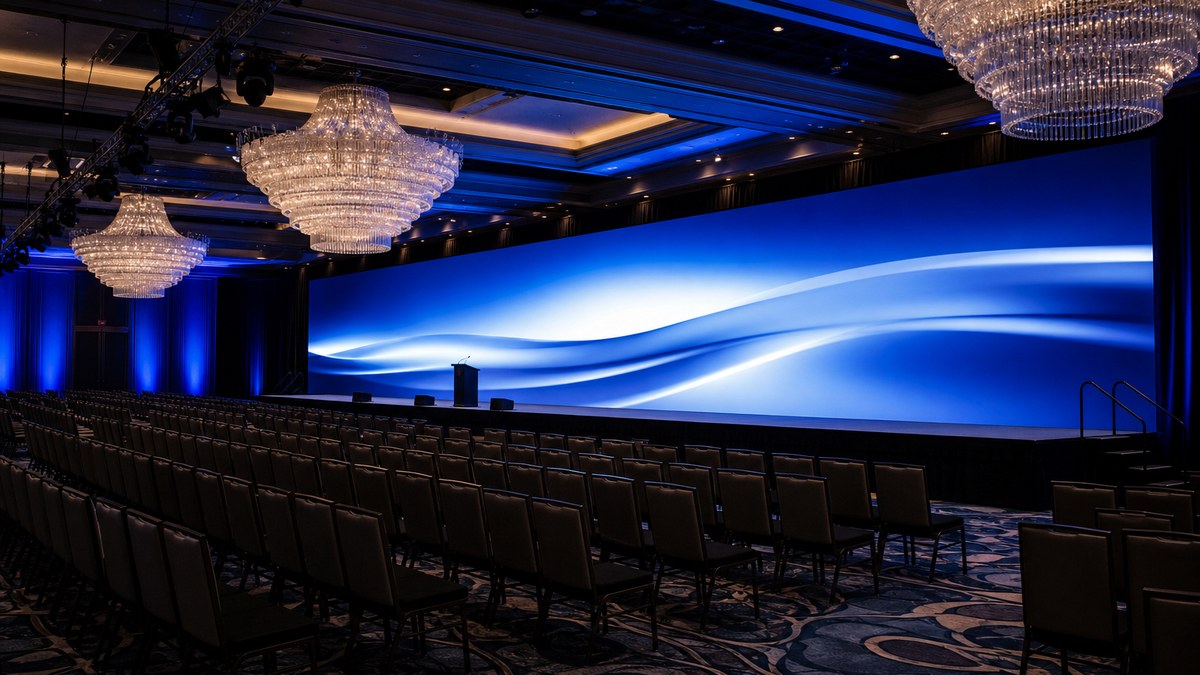
Large walls in ballrooms and pre-function areas let each event bring its own branding, agenda, and sponsor content, and can serve as stage backdrops for general sessions.
Churches and worship spaces
Stage walls carry lyrics, sermon notes, camera feeds, and atmosphere, and they look great on livestreams when the refresh rate and brightness are set correctly.
Retail, restaurants and entertainment
Feature walls and ribbons create atmosphere, promote menus and events, and show live sports in restaurants and entertainment spaces around the Urban Center and Valley Ranch.
Operations and data spaces
Network operations, security, and logistics teams near the DFW Airport corridor use walls to watch dashboards, cameras, and maps around the clock.
Indoor vs outdoor LED displays
Interior video walls and exterior LED displays are different products. Outdoor displays need weather-sealed cabinets, much higher brightness for daylight readability, thermal management for Texas summers, and compliance with local sign regulations. If your project includes exterior message centers, monument displays, or facade media, we coordinate those with our partners at American LED Signage and align them with your outdoor LED lighting so the whole property feels consistent after dark.
How a video wall project is planned
- Discovery. Goals, audience, content, sources, and how the space is used day and night.
- Site review. Wall construction, sightlines, ambient light, power, data, and access.
- Recommendation. Pitch, size, shape, technology, mounting, and control options, with alternatives where useful.
- Proposal. A clear scope and a project-specific price.
- Engineering and coordination. Structure, power, data, and finishes coordinated with your contractor, architect, and building engineer.
- Installation. Mounting, cabinet assembly, cabling, and processor setup, scheduled around your business.
- Calibration and commissioning. Color and brightness uniformity, input mapping, schedules, and testing.
- Training and handover. Hands-on training for your team, documentation, and spare modules.
- Support. Maintenance, remote monitoring where available, and fast module replacement.
What affects the investment
We price every video wall per project because no two walls are the same. The main factors are:
| Factor | Why it matters |
|---|---|
| Pixel pitch | Finer pitch means more LEDs per area and more processing |
| Size and shape | Larger, curved, and corner walls need more cabinets and custom structure |
| Brightness and technology | High-brightness and COB products differ from standard indoor SMD |
| Mounting and structure | Recessed niches, steel, and rigging add engineering and labor |
| Power and data | New circuits, cabling, and equipment space |
| Control and content | Processors, media players, CMS, and content creation |
| Site conditions | Occupied buildings, after-hours work, and access constraints |
| Support | Spare modules, maintenance plans, and monitoring |
Pricing: quoted per project after a site review. Call (702) 738-2218 or request a consultation and we will prepare options that fit your goals.
Common video wall mistakes
- Choosing pitch from a spec sheet, not the room. Over-specifying pitch for a wall seen from far away spends money where nobody can see it; under-specifying it for a close-up wall shows a visible pixel grid.
- Ignoring ambient light. A wall that looks perfect in the showroom can wash out in a glass atrium at noon.
- Running at full brightness. Overly bright walls cause glare and waste energy; scheduled dimming fixes both.
- No content plan. Stretched TV content and stale slides undercut the investment.
- Forgetting service access. A rear-service wall built flush against drywall is hard to maintain.
- Skipping spares. Modules from a later production batch can differ slightly; ordering spares with the wall keeps repairs invisible.
- Treating the wall as separate from lighting. Lobby lighting that spills onto the screen or clashes in color temperature hurts the image.
Lighting design around the wall
A video wall never lives alone. Downlights that hit the screen wash out blacks, and very cool or very warm surrounding light changes how content looks. Good lobby design aims ambient light away from the screen face, keeps color temperature consistent, and uses dimmable scenes so the lobby and wall shift together from day to evening events. Our Luminance design-build service brings architectural lighting and display planning together, and our Las Colinas commercial LED lighting guide covers lobby and office lighting in more depth.
Maintenance and lifespan
LED video walls are designed for long operating lives, and good care keeps them looking new:
- Keep spare modules, power supplies, and receiving cards from the original production batch
- Clean the surface gently with methods approved for the product
- Keep ventilation paths and equipment rooms clear and cool
- Run periodic calibration to maintain uniform color and brightness
- Update processor and CMS software on a schedule
- Use ambient sensors and schedules so the wall is not running bright when nobody is there
A support plan with defined response times keeps the wall reliable, which matters most in lobbies, venues, and worship spaces where a dark module is noticed immediately.
Why work with Irving LED Lights
We design, supply, install, program, and support LED video walls, signage, and architectural lighting across Irving, Las Colinas, Valley Ranch, Coppell, and the wider DFW metroplex. Because we also handle lobby lighting, controls, facade, and outdoor lighting, your video wall is planned as part of the whole space rather than bolted on. Our team brings 15+ years as an authorized architectural lighting dealer and project coordinator. Our licensed installation partner has completed over 200 major sports and commercial projects across the US and Canada — NFL, NBA, NHL, MLS, NCAA and NASCAR.
Explore our LED video wall services, our full commercial lighting services, LED signage, and learn more about our team. If you are weighing a phased approach, our guide to affordable commercial LED lighting upgrades explains how to get more from your plan, and we serve every area listed on our service areas map.
Frequently Asked Questions
How much does an LED video wall cost in Irving?
What pixel pitch do I need for a lobby video wall?
Is an LED video wall better than a wall of TVs?
How bright should an indoor LED video wall be?
Can an LED video wall be curved or wrap a corner?
Will the video wall look good on camera and livestreams?
How is a video wall installed in an existing building?
How long do LED video walls last and how are they maintained?
Who controls the content on the wall?
What areas do you serve?
Let's build your video wall
Request a consultation and we will follow up to review your space, content, and goals.
Related
Our DFW lighting network: Dallas commercial LED lighting, Fort Worth LED lighting, Arlington LED lighting, Plano LED lighting, statewide Texas LED lighting, wholesale LED components, fiber optic starlight ceilings, 360° laser fiber optic lighting, modular building solutions, and Dallas modular structures.