Affordable Commercial LED Lighting Upgrades in Irving, TX: How to Get More Light for Your Budget
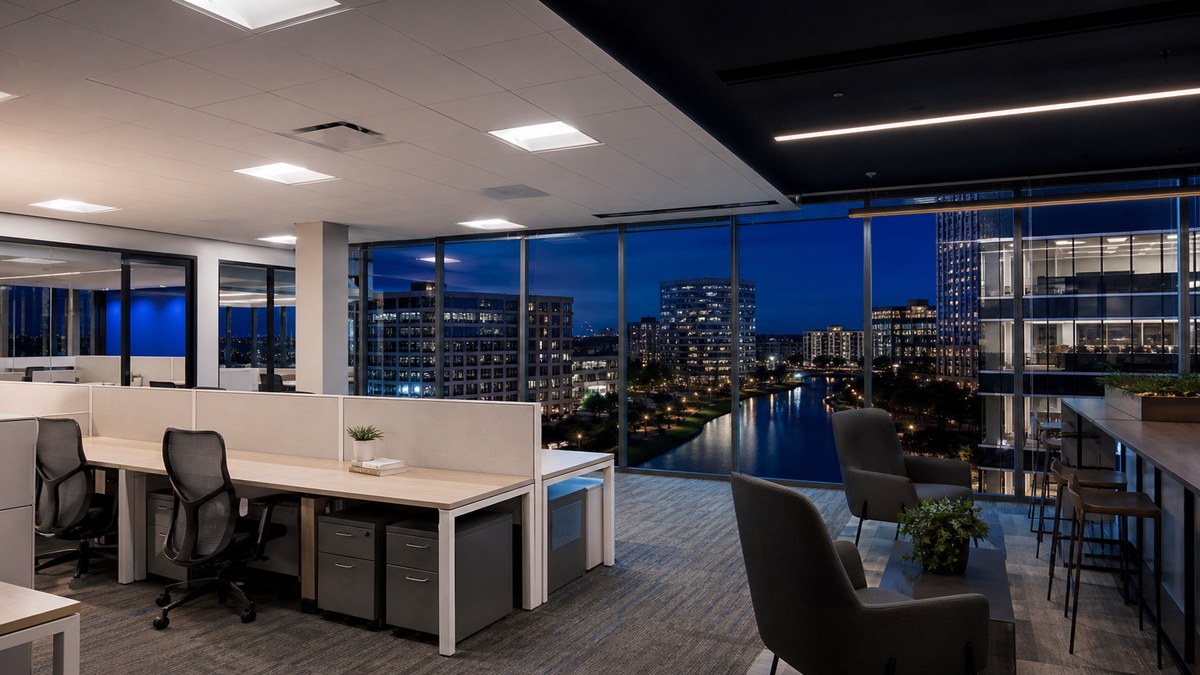
Affordable commercial LED lighting upgrades in Irving are less about finding the cheapest lights and more about spending every dollar where it does the most work. Property owners, facility managers, and business owners across Irving, Las Colinas, Valley Ranch, and the DFW Airport corridor are under pressure to cut operating costs, modernize tired spaces, and keep tenants and customers happy, often without a large capital budget. The good news is that LED technology now offers several upgrade paths, from simple lamp swaps to full fixture replacement, and the smartest projects mix them to match each space.
This guide explains how to plan a budget-smart LED upgrade for a commercial property in Irving: the main retrofit options and when each makes sense, how to phase a project, where cutting corners backfires, how controls and utility incentives fit in, and what to ask before you sign a proposal. We do not publish price lists, because every building is different. Instead, we show you how to think about value so that the quote you receive fits your goals.
The most affordable way to upgrade commercial lighting is to match the retrofit method to each space instead of using one approach everywhere, then add simple controls and check for utility incentives.
- LED tubes (TLEDs): lowest disruption where existing fixtures are in good condition
- Retrofit kits: new LED performance inside existing housings, without ceiling demolition
- New fixtures: best long-term value where fixtures are old, damaged, or the layout is wrong
- Phasing: start with the longest-burning, highest-impact areas first
- Controls: occupancy sensors, daylight dimming, and schedules multiply savings
- Incentives: projects may qualify for Oncor programs, depending on program availability
- Pricing: quoted per property after a site review
What "affordable" really means for commercial lighting
When people search for cheap lights in Irving, they usually want one of two things: a low purchase price, or a low total cost to run their building. Those are not the same. The lowest-priced lamp on a shelf can end up being the most expensive choice if it fails early, flickers, hums, looks the wrong color, or needs a technician on a lift every few months.
For a commercial property, true affordability comes from the whole picture:
- Upfront cost: equipment, labor, lifts, disposal, and any electrical work.
- Energy use: how much power the lighting draws and how many hours it runs.
- Maintenance: how often lamps and drivers need replacing and how hard they are to reach.
- Disruption: how much the work interrupts tenants, staff, guests, or operations.
- Lifespan and warranty: how long the system lasts and who stands behind it.
- Quality of light: whether people can see well, feel comfortable, and like the space.
A budget-smart upgrade balances all six. Our goal on every Irving project is to find the combination that delivers the best result for the budget you have, not simply the lowest number on page one of a proposal.
The three main LED upgrade paths
Most commercial buildings in Irving still have at least some fluorescent troffers, high-bay fixtures, wall packs, or older metal halide lighting. There are three main ways to bring them up to LED, and each has a place.
1. LED replacement tubes (TLEDs)
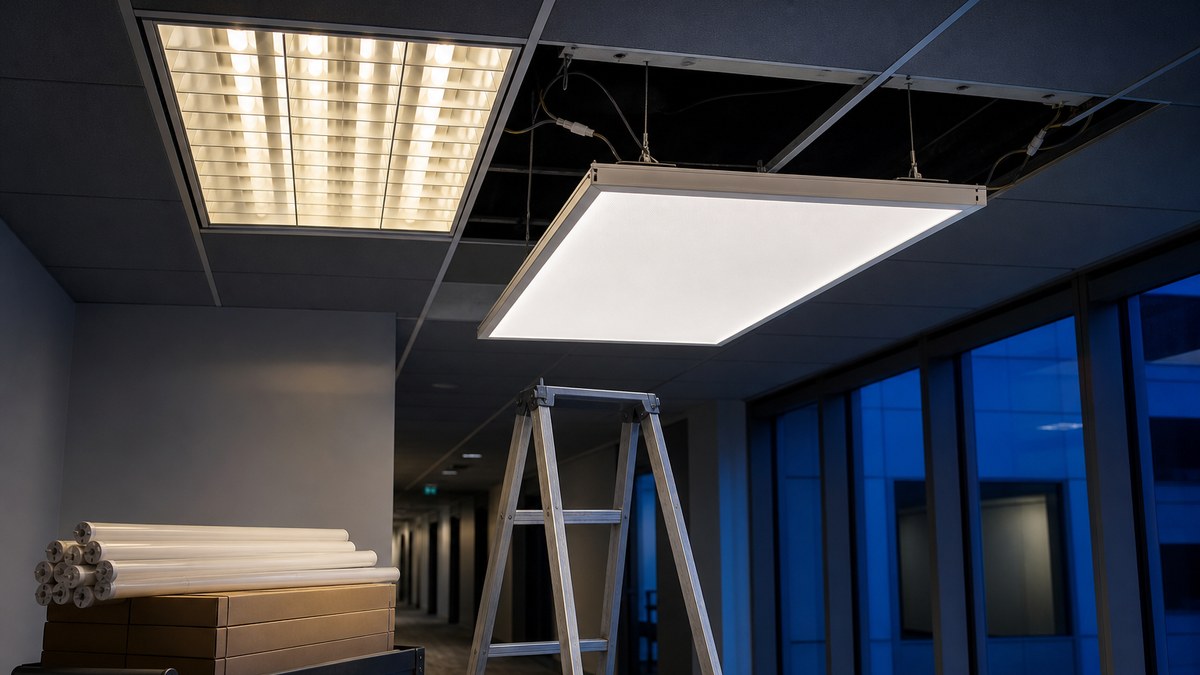
Linear LED tubes replace fluorescent tubes inside the existing fixture. They come in a few versions. Plug-and-play tubes (often called Type A) work with the existing fluorescent ballast. Ballast-bypass tubes (Type B) are wired directly to line voltage after the ballast is removed. Hybrid tubes (Type A/B) can run either way, and Type C tubes use a separate remote driver.
Tubes are usually the quickest and least disruptive option. They are a sensible choice when fixtures are in good condition, lenses are clean, and the existing layout already lights the space well. The trade-off is that the fixture itself stays old: yellowed lenses, worn sockets, and dated appearance remain, and plug-and-play tubes still depend on the old ballast.
2. LED retrofit kits
Retrofit kits replace the guts of an existing fixture, such as the lamps, ballast, and sometimes the lens or door, with an integrated LED assembly, while the housing stays in the ceiling. Kits deliver performance much closer to a new fixture, often with a fresh, modern look, and they avoid opening up ceilings or replacing housings.
Kits are a strong middle path for offices, schools, retail, and common areas where the housings are sound but the look and performance need a real improvement. They also make it easier to add dimming and sensor control at the same time.
3. New LED fixtures
Full fixture replacement removes the old fixture and installs a new LED luminaire. It has the highest upfront investment of the three, but it often delivers the best long-term value: a new warranty on the whole fixture, better optics and glare control, built-in controls, and the chance to fix layouts that never worked well in the first place.
New fixtures make the most sense when existing fixtures are damaged, corroded, or obsolete, when the space is being renovated anyway, or when the lighting design itself needs to change, for example in a warehouse that has been re-racked or an office converted to open plan.
Comparing the options side by side
| Upgrade path | Best for | Strengths | Watch out for |
|---|---|---|---|
| Plug-and-play tubes (Type A) | Fixtures in good shape with healthy ballasts | Fastest install, minimal labor | Still relies on the old ballast; compatibility must be checked |
| Ballast-bypass tubes (Type B) | Sound fixtures where ballasts are aging | Removes the ballast as a failure point | Requires rewiring by a qualified electrician and proper labeling |
| Retrofit kits | Good housings, dated look or poor performance | Near-new performance, modern appearance, no ceiling demolition | Kit must be listed for the fixture type and installed correctly |
| New fixtures | Damaged or obsolete fixtures, renovations, layout changes | Best optics, full warranty, integrated controls | Higher upfront investment, more installation work |
| Mixed approach | Most real buildings | Right method for each space, best value overall | Needs a proper site survey and clear documentation |
In practice, the most affordable projects use a mix. A Las Colinas office building might use retrofit kits in tenant suites, new fixtures in a lobby that needs to impress, tubes in back-of-house storage rooms, and new LED wall packs and pole heads in the parking lot.
Where to start: prioritizing by impact
If the budget will not cover the entire building at once, phase the work. The order matters, because some areas pay back far faster than others in energy, maintenance, and appearance.
- Longest-burning areas first. Lighting that runs all day or all night, such as corridors, stairwells, parking garages, warehouses, and exterior lighting, gives the biggest energy return from each fixture.
- Hard-to-reach fixtures next. High bays, atrium lighting, and pole lights cost the most to maintain because every lamp change needs a lift. Switching them to long-life LED cuts those service calls.
- Customer-facing spaces. Lobbies, showrooms, entrances, and amenity areas shape first impressions and tenant retention.
- Problem areas. Spaces with flicker, dark spots, frequent failures, or complaints deserve early attention.
- Everything else. Back-of-house rooms and low-use spaces can follow in later phases.
A phased plan also spreads the investment across budget cycles while building a consistent standard for fixtures, color temperature, and controls so that every phase matches.
Ask for a single site-wide design and standard up front, even if you install it in phases. It prevents mismatched color temperatures and incompatible controls later, and it makes each phase faster to quote and install.
Smart ways to stretch the budget
- Right-size light levels. Many older buildings are over-lit. Designing to the light levels each task actually needs often means fewer or lower-output fixtures.
- Fix the layout, not just the lamps. Where fixtures are poorly placed, moving or removing a few can improve the space and reduce the count.
- Standardize products. Using a small set of fixture types across the property simplifies stocking spares and future maintenance.
- Bundle the work. Combining interior, exterior, and parking upgrades in one mobilization reduces repeated lift rentals and travel time.
- Coordinate with other projects. If ceilings are being replaced or a suite is being renovated, upgrade the lighting at the same time.
- Add controls where they pay. Sensors in restrooms, storage, conference rooms, and stairwells are inexpensive relative to the energy they save.
- Check incentive programs early. Some programs require approval before work begins.
Where cutting corners costs more later
Saving money is the goal, but some shortcuts reliably cost more in the long run. These are the ones we see most often on commercial properties:
- Unlisted or unknown products. Commercial lighting should carry recognized safety listings. Unlisted products can create code, insurance, and safety problems.
- Poor drivers. The driver is the heart of an LED fixture. Cheap drivers are the most common cause of early failure, flicker, and buzzing.
- Ignoring compatibility. Plug-and-play tubes must match the existing ballast, and dimming products must match the control system. Mismatches lead to flicker and early failures.
- Mixed color temperatures. Buying whatever is cheapest each time leaves a building with a patchwork of warm and cool light that looks unprofessional.
- Glare and poor optics. Bare, bright LED sources can be uncomfortable for workers and customers, which undermines the upgrade.
- No documentation. Without records of what was installed where, future repairs and phases take longer.
- Weak warranties. A low price with a short or unclear warranty often means you pay for replacements yourself.
Get the most light for your budget
Tell us about your building and goals and we will follow up with options and a project-specific proposal.
Controls: the low-cost multiplier
Switching to LED reduces the power each fixture draws. Controls reduce the number of hours that power is used. Together they deliver far more than either one alone, and many control upgrades are modest compared with fixture work.
- Occupancy and vacancy sensors turn lights off in restrooms, storage rooms, conference rooms, and break rooms when nobody is there.
- Daylight harvesting dims fixtures near windows and skylights when daylight is available, a natural fit for glass-heavy Las Colinas offices.
- Time schedules make sure lighting is off or dimmed after hours and on weekends.
- High-end trim sets the maximum output of each fixture below full power when full power is not needed.
- Bi-level parking and garage lighting dims when no motion is detected and brightens when people or vehicles arrive.
- Networked controls let larger buildings manage zones, schedules, and reports from one place.
Energy codes also matter. When lighting is replaced, applicable energy code requirements for controls may apply depending on the scope. A good proposal should explain what is required and what is optional. For a deeper look, see our guide to commercial lighting control systems in Irving.
Utility incentives and Oncor programs
Irving businesses are served by Oncor for electricity delivery, and Oncor offers commercial energy efficiency programs that support projects such as lighting upgrades. Depending on the building, the scope, and program availability, an LED and controls project may qualify for an Oncor incentive. Program rules, eligible measures, and funding change from year to year, and some programs require pre-approval before equipment is purchased or installed.
Because of that, we do not quote incentive amounts in advance. What we do is help you check whether your project may qualify, provide the product documentation programs typically ask for, and plan the timeline so that pre-approval steps are not missed. Incentives are a bonus on a project that already makes sense, not a reason to choose the wrong products.
Budget-smart upgrades by property type
Class A and Class B offices
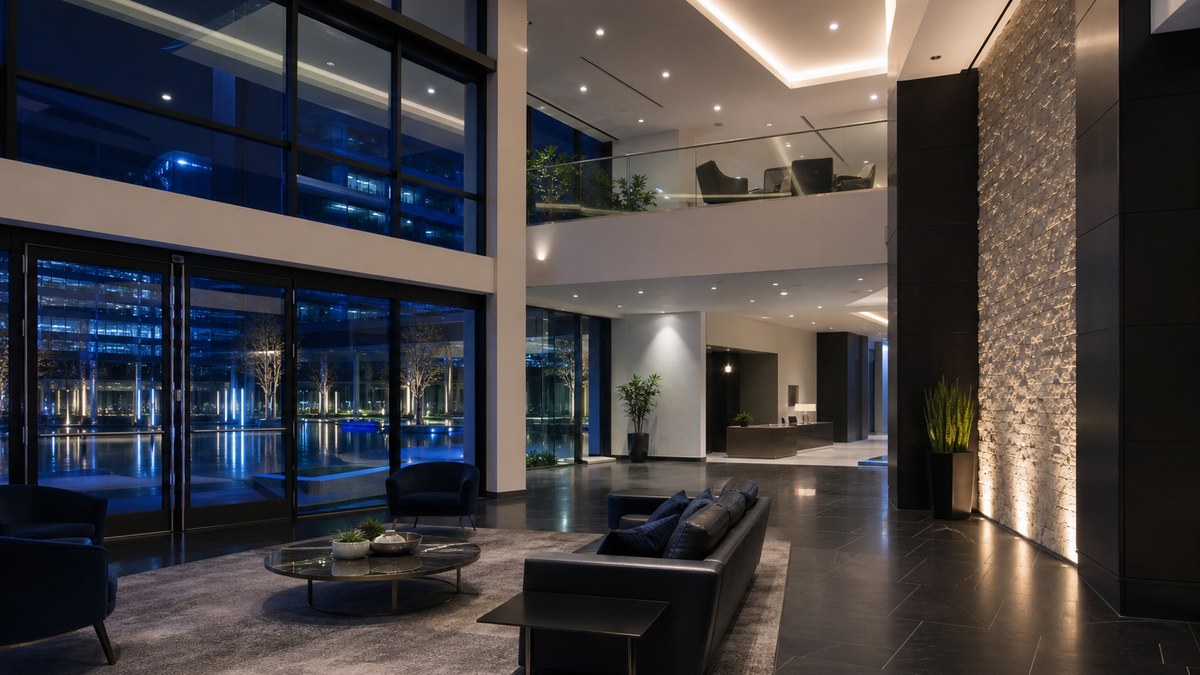
Retrofit kits in tenant suites, daylight-responsive dimming along window walls, sensors in conference and restrooms, and a lobby upgrade that signals quality to prospective tenants. Office buildings around Las Colinas compete for tenants, so lighting is also a leasing tool. See our Las Colinas commercial lighting guide for more.
Warehouses and logistics
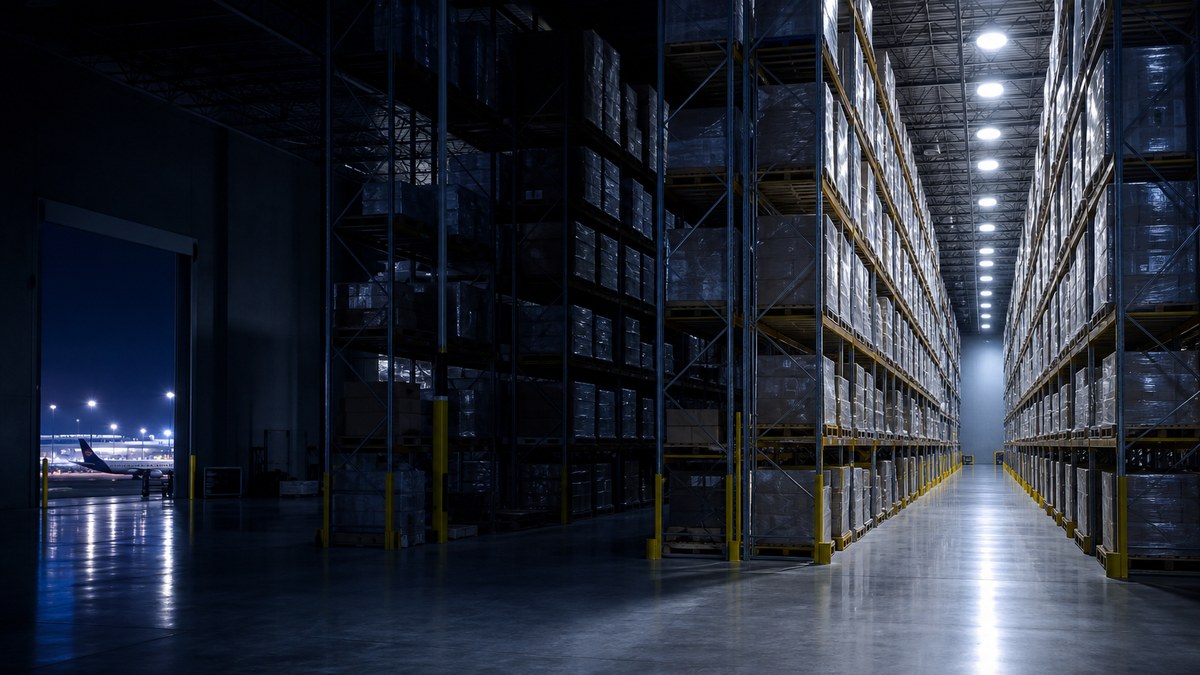
LED high bays with motion sensors in aisles, which light only where forklifts and people are working. Facilities near DFW Airport often run long shifts, so these spaces are usually first in line for upgrades.
Retail and restaurants
Good color rendering matters more than raw brightness here, because merchandise and food need to look right. Track and accent lighting on displays, warm and comfortable dining light, and dimmable scenes for different times of day.
Hotels and hospitality
Corridors and back-of-house areas that run around the clock, plus guest-facing spaces where quality of light shapes reviews. Phasing by floor keeps rooms in service during the work.
Parking lots and garages
Exterior and garage lighting runs every night and is hard to reach, making it one of the strongest candidates for LED and controls. Even, well-shielded light also improves safety and camera coverage. Our outdoor LED lighting guide covers parking, facades, and site lighting in detail.
Grounds and landscapes
Path and accent lighting can be upgraded to efficient LED with photocells and schedules. See our commercial landscape lighting guide for ideas.
Quality checklist before you buy
| Check | Why it matters |
|---|---|
| Safety listing | Recognized listings for the product and the way it is installed protect people, property, and insurance coverage |
| Program qualification | Many incentive programs only accept products on recognized qualified product lists |
| Driver quality | Determines lifespan, flicker performance, and dimming behavior |
| Color temperature | Should match the use: warmer for hospitality, neutral for offices, cooler for some industrial spaces |
| Color rendering (CRI) | Higher CRI makes skin tones, products, and finishes look natural |
| Glare control | Lenses, louvers, and optics make spaces comfortable to work in |
| Dimming compatibility | Products must work with the control system you plan to use |
| Warranty terms | Clear coverage on fixtures, drivers, and installation workmanship |
| Documentation | Cut sheets, fixture schedules, and as-built records simplify maintenance and future phases |
Planning a budget-smart project
- Site survey. Count fixtures, note condition, measure light levels where needed, and record operating hours for each area.
- Goals and budget. Agree on priorities: energy, maintenance, appearance, tenant comfort, or all of these.
- Options by space. Choose tubes, kits, or new fixtures area by area, plus the controls that make sense.
- Incentive check. Review which programs the project may qualify for and any pre-approval steps.
- Proposal. A clear scope, product list, phasing plan, and project-specific price.
- Installation. Scheduled around tenants and operations, including after-hours or weekend work where needed.
- Programming and commissioning. Sensors, schedules, and dimming are set up and tested so savings actually happen.
- Close-out. Documentation, warranty records, and a plan for the next phase.
Questions to ask any lighting contractor
- Did you survey every space, or is the proposal based on a fixture count alone?
- Why did you choose tubes, kits, or new fixtures for each area?
- Are all products listed for the way they will be installed?
- What color temperature and color rendering are you specifying, and why?
- Which controls are included, and which are required by code for this scope?
- Who handles incentive paperwork and pre-approval, if any program applies?
- What exactly is covered by the warranty, and who do I call if something fails?
- Will I receive documentation of what was installed where?
A contractor who can answer these clearly is far more likely to deliver an upgrade that stays affordable for years.
Why work with Irving LED Lights
We help Irving and Las Colinas property owners plan, supply, install, program, and service commercial LED lighting, from a single suite to a full campus, interior and exterior. We focus on value: the right method for each space, quality products, controls that are properly commissioned, and a phasing plan that fits your budget. Our team brings 15+ years as an authorized architectural lighting dealer and project coordinator. Our licensed installation partner has completed over 200 major sports and commercial projects across the US and Canada — NFL, NBA, NHL, MLS, NCAA and NASCAR.
Explore our commercial lighting services, including commercial LED lighting, architectural lighting, and lighting service and maintenance, or see how our Luminance design-build approach handles complete transformations. You can also learn more about our team and the areas we serve.
Frequently Asked Questions
What is the most affordable way to upgrade commercial lighting to LED?
How much does a commercial LED upgrade cost in Irving?
Are cheap LED lights worth it for a business?
Should I use LED tubes or retrofit kits?
Can I upgrade my building in phases?
Do Oncor incentives apply to LED lighting upgrades?
Do lighting controls add a lot to the project?
Will an LED upgrade disrupt my tenants or operations?
What areas do you serve?
Upgrade smarter, not cheaper
Request a consultation and we will follow up to schedule a site review and a proposal built around your budget.
Related
Our DFW lighting network: Dallas commercial LED lighting, Fort Worth LED lighting, Arlington LED lighting, Plano LED lighting, statewide Texas LED lighting, wholesale LED components, fiber optic starlight ceilings, 360° fiber optic lighting, American LED signage, modular building solutions, and Dallas modular structures. Visit our blog for more guides or return to the Irving LED Lights home page.