LED Video Walls Across DFW: Arlington, Haltom City, Richardson, Frisco & McKinney
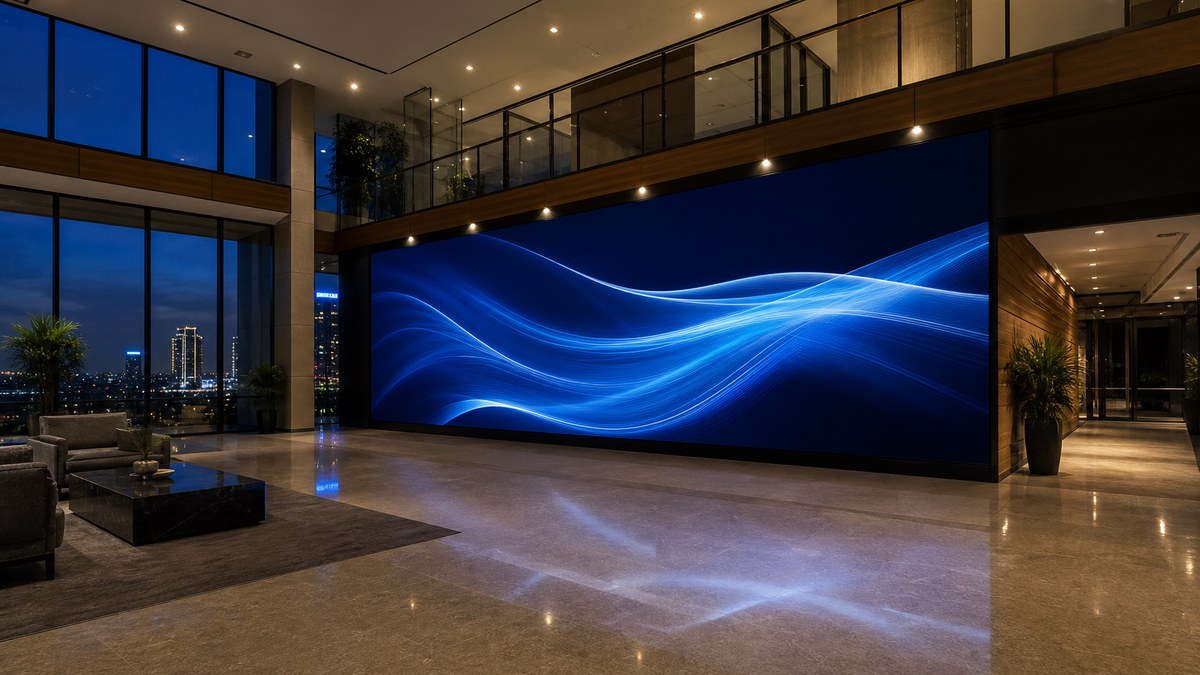
LED video walls in DFW are no longer just for stadiums and flagship headquarters. Businesses in Arlington, Haltom City, Richardson, Frisco, McKinney and the rest of the metroplex now use direct-view LED walls in lobbies, conference rooms, showrooms, worship spaces, restaurants, training rooms, and on building exteriors. From our base in Irving, near the middle of the Dallas–Fort Worth area, we plan and deliver video wall projects across the region, and the same questions come up in every city: which pixel pitch, indoor or outdoor, buy or rent, what permits, and how the wall will be supported for years after installation.
This guide answers those questions for businesses outside Irving. If your project is in Irving or Las Colinas, start with our companion guide to LED video walls in Irving, which covers lobbies, conference rooms, hotels, and event spaces in detail. This article focuses on the wider metroplex: how projects differ from city to city, how to choose between a permanent screen wall and a rental, and how to plan a wall that looks right, passes local review, and stays reliable.
An LED video wall is a large, seamless display built from LED cabinets. Across DFW, the right wall depends on viewing distance, indoor or outdoor use, content, structure, and local sign rules.
- Pixel pitch: chosen from the closest normal viewing distance
- Indoor vs outdoor: outdoor walls need much higher brightness, sealed cabinets and Texas-heat planning
- Buy vs rent: permanent walls for daily use; rentals for events, launches and short campaigns
- Permits: exterior and street-facing displays follow each city's sign ordinance
- Service: front-serviceable cabinets, spare modules and a support plan matter as much as the screen
- Pricing: quoted per project after a site review — no one-size price
What an LED video wall is (and what a "screen wall" means)
A direct-view LED video wall is made of modular cabinets, each filled with LED modules, that join edge to edge into one continuous image. Unlike a grid of LCD panels, there are no bezels or seams, so the wall can be almost any size or shape: a wide lobby canvas, a curved wall in an atrium, a column wrap, a ribbon along a mezzanine, or a full exterior display.
People search for these in different words. "Screen wall," "LED wall," "video wall," "LED display," and "LED volume wall" usually describe the same family of products, with a few differences:
- LED video wall / LED wall: direct-view LED cabinets forming one large display, indoor or outdoor.
- LCD video wall: a grid of thin-bezel LCD panels. Lower entry point for small control rooms, but with visible seams.
- Screen wall: often used for a permanent architectural display built into a wall, frame or millwork.
- LED volume wall: a large LED stage used for virtual production and film, a specialist category with its own design needs.
- LED sign or message center: an exterior display used mainly for advertising or information along roads, covered by sign rules.
For most commercial interiors in DFW, a direct-view LED wall is the right answer when the display needs to be large, seamless, and bright enough to hold its own against daylight from glass lobbies.
Where DFW businesses are using video walls
Each city in the metroplex has its own mix of buildings, and that mix shapes the typical video wall project. These are patterns, not rules, and every site is different.
Arlington
Arlington sits between Dallas and Fort Worth and is known for its entertainment district, hotels, restaurants, and event traffic. Video wall projects here often involve hospitality venues, sports bars, event spaces, and retail that need high-impact displays for game days and events, plus exterior screens that must work in direct sun. For general lighting projects in the city, our network partner Arlington LED lighting covers the local market, and we coordinate video wall scopes across both.
Haltom City
Haltom City, in Tarrant County northeast of Fort Worth, has a strong base of industrial, distribution, and local business properties. Typical projects include operations and dispatch displays, showroom screens, training rooms, and exterior message displays for businesses along busy corridors. In industrial settings the priorities are durability, clear readability from a distance, and simple content control rather than ultra-fine pixel pitch.
Richardson
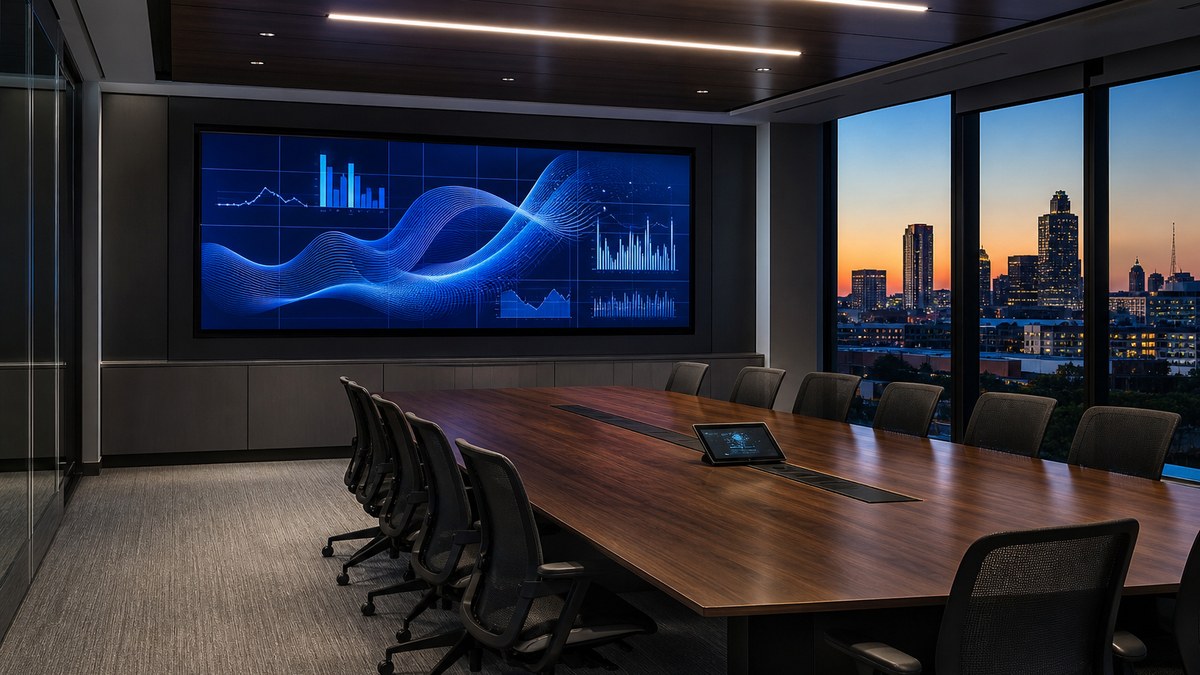
Richardson, north of Dallas along US-75, is home to the Telecom Corridor and a large number of technology and corporate offices. Video wall projects here lean toward fine-pitch conference room walls, executive briefing centers, network and security operations rooms, and lobby displays for corporate campuses. Content is often data dashboards and presentations, so pixel pitch and color accuracy matter.
Frisco
Frisco has grown into a major destination for sports, entertainment, mixed-use development, and corporate offices in Collin and Denton counties. Common projects include lobby feature walls, retail and restaurant displays, training facilities, and branded experiences in mixed-use districts where screens need to look premium up close.
McKinney
McKinney combines a historic downtown with fast-growing commercial and corporate areas. Projects range from worship and event spaces to corporate lobbies and outdoor displays for new developments, often with careful attention to how a screen fits the architecture and local design standards.
Across the rest of the metroplex
We also support projects in Dallas, Fort Worth, Plano, Coppell, Grapevine, Grand Prairie, Carrollton, Lewisville and beyond. For Dallas and Plano lighting work our network sites Dallas commercial LED lighting and Plano LED lighting are good starting points, and Fort Worth LED lighting covers the west side of the metroplex.
Choosing pixel pitch for your viewing distance
Pixel pitch is the distance between the centers of neighboring LED pixels, measured in millimeters. A smaller pitch packs more pixels into the same space, so the image stays sharp when viewers stand close. A larger pitch is fine when viewers are far away, and it keeps hardware and power needs lower for the same screen size.
A widely used rule of thumb is that the minimum comfortable viewing distance in meters is roughly equal to the pixel pitch in millimeters. It is only a starting point: content type, ambient light, and how close people will actually stand all affect the final choice.
| Space | Typical viewing | Pitch direction |
|---|---|---|
| Executive conference room, briefing center | Close, detailed content | Fine pitch for sharp text and spreadsheets |
| Operations / NOC / dispatch room | Seated, medium distance | Fine to medium pitch, high uniformity |
| Corporate lobby feature wall | Walk-by and from across the lobby | Medium pitch, high brightness for glass lobbies |
| Restaurant, sports bar, retail | Mixed distances | Medium pitch balanced with brightness |
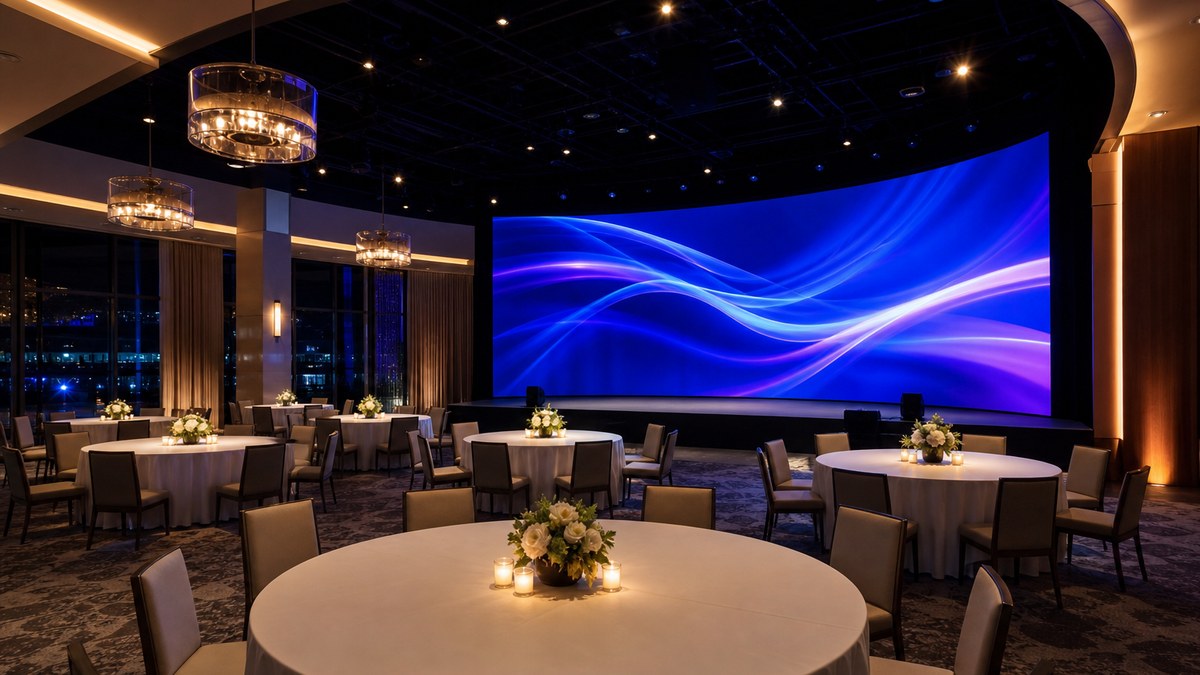
| Worship and event spaces | Far seats and stage use | Medium to larger pitch, camera-friendly refresh |
| Building exterior, roadside display | Long distance, sunlight | Larger pitch, outdoor-rated, very high brightness |
Walk the space and stand where people will actually stand. The closest regular viewing spot, not the average, usually decides the pitch. If the wall will appear on camera for streams or events, ask about refresh rate and scan rate too.
Indoor vs outdoor video walls in Texas
Indoor and outdoor LED walls look similar on a spec sheet, but they are built for very different conditions.
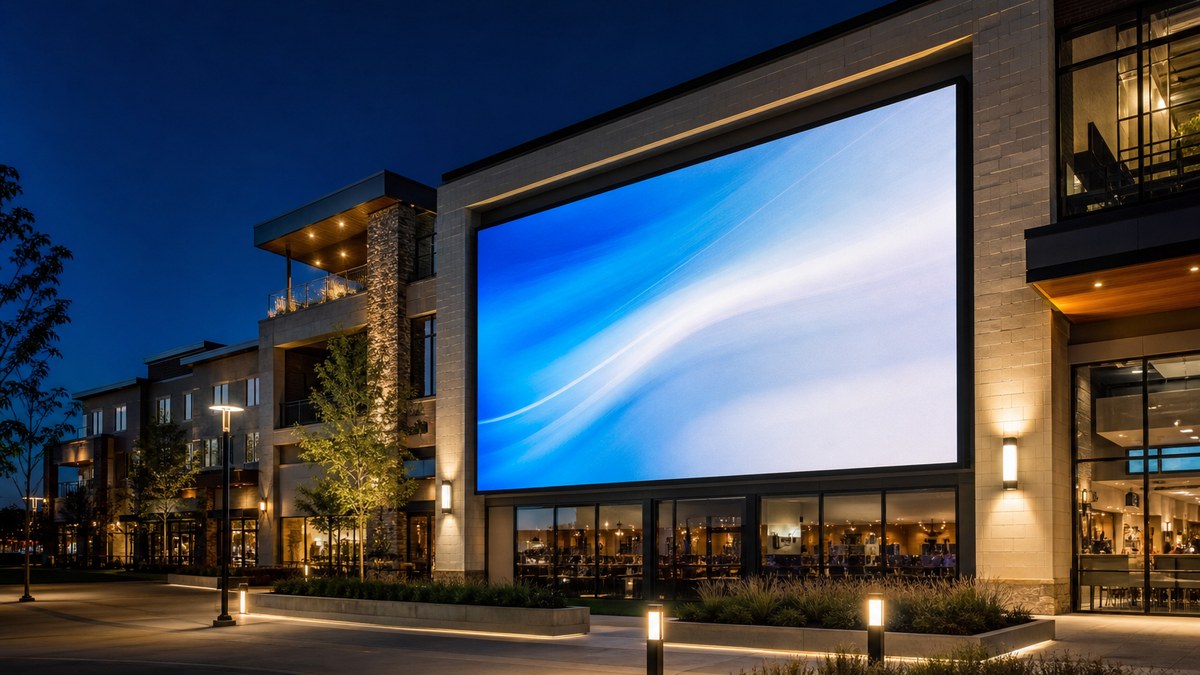
- Brightness: indoor walls are usually specified in the hundreds of nits up to around a thousand for bright lobbies, while outdoor walls are specified in the thousands of nits so they stay readable in direct Texas sun.
- Weather protection: outdoor cabinets are sealed against rain, dust, and humidity and carry an appropriate ingress protection rating; indoor cabinets are not.
- Heat: North Texas summers are hard on electronics. Outdoor walls need thermal design, ventilation or cooling, and power supplies rated for the heat.
- Storms: surge protection, proper grounding, and structural design for wind loads are essential for exterior displays.
- Night operation: automatic dimming with an ambient light sensor keeps an exterior wall from becoming glare at night and helps meet local brightness rules.
Semi-outdoor locations, such as covered patios, storefront windows, and porte-cocheres, need their own planning. A wall behind glass facing west can see more heat and sun than you might expect, so we check sun angles and ventilation before recommending a product.
Buy or rent? Permanent walls vs LED screen rental
One of the most common questions we hear is whether to buy a permanent wall or rent an LED screen. Both are valid, and many businesses do both: a permanent wall in the lobby and rentals for big events.
| Factor | Permanent installation | Rental |
|---|---|---|
| Best for | Daily use: lobbies, conference rooms, venues, exteriors | Events, launches, trade shows, seasonal campaigns |
| Integration | Built into walls, millwork, structure and building power | Ground-stacked or flown on temporary structures |
| Appearance | Clean architectural finish, hidden cabling | Event look, frames and cases visible unless dressed |
| Content | Scheduled, managed content system | Show-based playback, often operated on site |
| Permits | Electrical and, for exteriors, sign permits | Event and venue rules; temporary structure checks |
| Ownership | Your asset with warranty and service plan | Delivered, set up, and removed for each use |
If a screen will be used most weeks of the year, a permanent installation usually makes more sense. If it is needed a few times a year, rental is often more practical. We can help you compare both options for your specific use before you decide, with project-specific pricing for each.
Planning a video wall anywhere in DFW?
Tell us the space, the viewing distance, and how you will use it. We will follow up with options and a project-specific quote.
Permits, sign rules and approvals
Indoor video walls generally need the same electrical work and permits as any other commercial electrical installation, plus structural review when the wall is heavy or mounted to a wall that was not designed for it.
Exterior displays are different. Every city in the metroplex has its own sign ordinance, and electronic or changeable message signs are often regulated separately from static signs. Typical rules address where electronic signs are allowed, size, height, setbacks, how often the message can change, animation, and nighttime brightness. Some cities limit electronic signs to certain zoning districts or require special approval. Displays visible from state highways may also be subject to Texas Department of Transportation outdoor advertising rules.
Because these rules vary from Arlington to Frisco to Haltom City, and they change over time, we always confirm requirements with the city before a design is finalized, and we build automatic dimming and content timing into the control system so the sign can operate within the approved limits.
If you are a tenant, check your lease and the property owner's signage criteria too. Many shopping centers and office parks have their own rules on exterior and storefront displays in addition to city codes.
Structure, power and data
A video wall is a building system, not just a screen. Good planning covers:
- Structure: wall backing, mounting frames, floor loading for ground-supported walls, and engineered structures for exterior displays.
- Service access: front-serviceable cabinets for walls mounted flat to a surface, or rear access space where available.
- Power: dedicated circuits sized for peak load, surge protection, and a clear plan for where power supplies and controllers live.
- Heat: ventilation in enclosed walls and equipment rooms so electronics do not run hot.
- Data: controllers, signal paths and network connections that your IT team can support.
- Finish: trims, millwork, or architectural surrounds so the wall looks designed into the space.
Coordinating these early with the architect, general contractor, and electrician avoids surprises once the cabinets arrive on site.
Content and control: the part people forget
The best hardware still looks poor with weak content. Before installation, decide who will manage the wall and what it will show:
- Content management: a system to schedule playlists, live feeds, dashboards, and presentations, often by zone on larger walls.
- Resolution-correct content: content built for the wall's actual pixel dimensions, not stretched from standard video.
- Input sources: laptops, conference systems, media players, cameras, and live TV as needed.
- Brightness scheduling: lower brightness at night and in dim rooms, higher brightness for sunny lobbies.
- Brand standards: templates and guidelines so the wall always looks on brand.
For lobbies, we often recommend slow, high-quality ambient content most of the day, with the option to switch to event or announcement content when needed. A video wall that is always flashing loses its impact quickly.
Video walls as part of the lighting design
A large LED wall changes how a space is lit. It can cause glare or reflections, make surrounding areas feel dark, or wash out under bright ceiling lighting. We plan the wall together with the room's lighting:
- Avoid direct downlights shining onto the screen surface
- Balance surrounding light levels so the wall does not feel like a bright hole in a dark room
- Use dimmable, controllable lighting so meeting rooms can shift from presentation to discussion
- Coordinate color temperature with the wall's white point for a consistent look
Our guides to commercial lighting control systems and office lighting upgrades for Class A buildings explain how controls and fixtures can be set up to work with displays.
Planning a DFW video wall step by step
- Discovery call. Your goals, location, audience, content, and timeline.
- Site review. Measurements, viewing distances, ambient light, structure, power, and access.
- Options. Pixel pitch, size, indoor or outdoor product, and rent vs buy where relevant.
- Design and coordination. Mounting, power, data, finishes, and lighting coordination with your team.
- Approvals. Electrical permits and, for exteriors, sign permits confirmed with the city.
- Proposal. A clear scope and project-specific quote.
- Installation. Cabinets, calibration for uniform color and brightness, and control setup.
- Training and handoff. Content system training and documentation for your staff.
- Support. Spare modules, service plan, and remote support where available.
Mistakes to avoid with LED video walls
- Choosing pitch by spec sheet alone. Too fine wastes budget; too coarse looks grainy up close.
- Using indoor products near sunny glass. West-facing lobbies and storefronts can overwhelm an indoor wall.
- Ignoring sign rules. Exterior displays installed without approval can be ordered off or limited.
- No spare parts. Modules from the same production batch keep repairs color-matched over time.
- Forgetting heat. Walls built into tight enclosures without ventilation shorten electronics life.
- No content plan. A blank or poorly fed wall hurts the space more than no wall at all.
- Poor room lighting. Glare and reflections can ruin an otherwise excellent display.
Long-term support and maintenance
LED walls are durable, but they still need care. A good support plan covers periodic inspection, cleaning appropriate to the surface, checking power supplies and connections, replacing failed modules from a matched spare stock, recalibrating color and brightness as the wall ages, and keeping control software updated. For exterior walls, we add checks after major storms and before the summer heat. Front-serviceable designs make most service quick and keep downtime short.
Video walls, signage and lighting under one plan
Many projects combine a video wall with other upgrades: new lobby lighting, exterior facade lighting, LED signage, or landscape lighting. Planning them together gives a consistent look and a single point of contact. See our video wall services, LED signage, and commercial outdoor LED lighting guide, along with our retail and shopping center lighting, hotel lighting, and restaurant and entertainment lighting articles for venue-specific ideas. Our Luminance design-build program brings displays, lighting, and controls together into one project.
For data-heavy operations rooms, our data center lighting guide covers low-glare lighting for NOCs and control rooms, and our Coppell and Valley Ranch guide covers nearby service areas.
Why work with Irving LED Lights
We plan, supply, install, program, and support commercial LED lighting and video walls across the DFW metroplex from Irving. Our team brings 15+ years as an authorized architectural lighting dealer and project coordinator. Our licensed installation partner has completed over 200 major sports and commercial projects across the US and Canada — NFL, NBA, NHL, MLS, NCAA and NASCAR. Every project is quoted individually after we understand the space, so you pay for the wall you need, not a generic package. Learn more about us or see the areas we serve.
Frequently Asked Questions
Do you install LED video walls outside Irving?
How much does an LED video wall cost in DFW?
What pixel pitch do I need?
Should I buy or rent an LED screen?
Can an indoor video wall go behind a storefront window?
Do outdoor LED displays need a permit in DFW cities?
What is the difference between an LED wall and an LCD video wall?
How long does a video wall project take?
Who manages the content after installation?
Let's plan your video wall
Request a consultation for a video wall in Arlington, Haltom City, Richardson, Frisco, McKinney, or anywhere in DFW.
Related
Our DFW lighting network: Dallas commercial LED lighting, Fort Worth LED lighting, Arlington LED lighting, Plano LED lighting, statewide Texas LED lighting, LED signage and video displays, wholesale LED components, fiber optic starlight ceilings, 360° laser fiber optic lighting, modular building solutions, and Dallas modular structures.