Data Center Lighting in Irving, TX: White Space, Controls, Emergency & Exterior LED Lighting
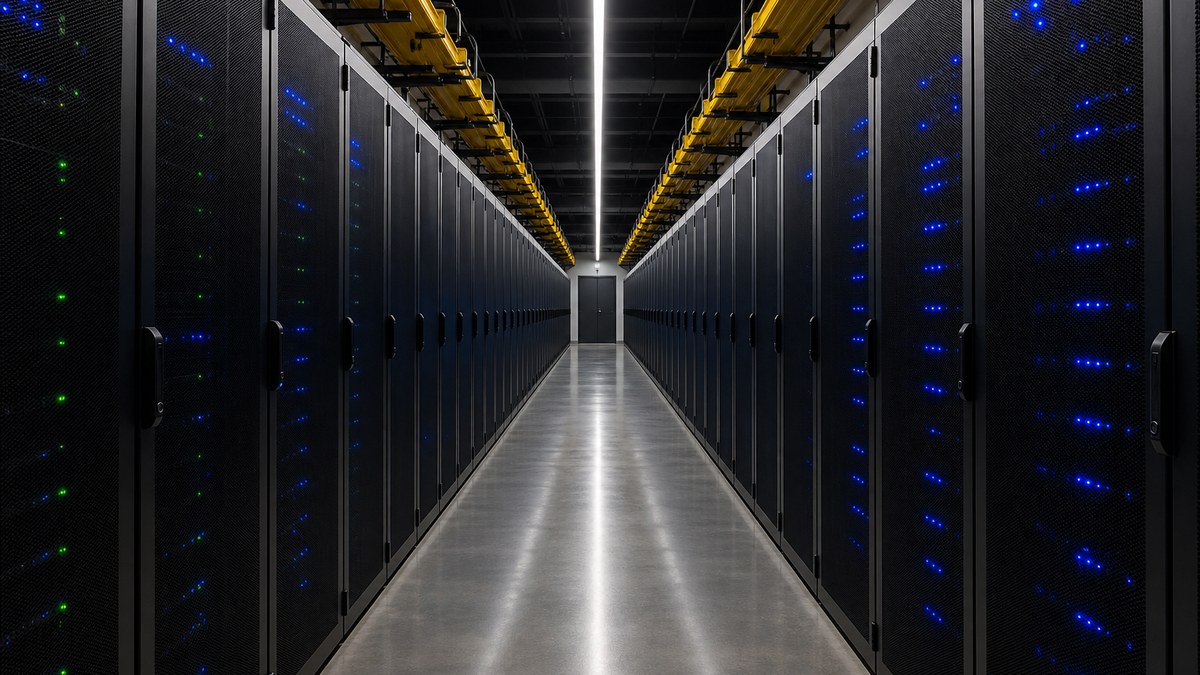
Data center lighting in Irving has one job above all others: help people work safely and accurately around critical equipment without adding risk, heat, or maintenance headaches. Irving and the DFW Airport corridor are home to a growing number of data center campuses, colocation halls, and mission-critical facilities, and each one depends on lighting that technicians can trust at 3 AM during an outage as much as during a routine install.
This guide explains how to light a data center the right way: the different zones of a mission-critical building, how to light hot and cold aisles so rack labels and ports are readable, which LED fixtures and controls make sense, how emergency and egress lighting should be planned, what to consider for perimeter security and exterior lighting, and how to upgrade a live facility without putting uptime at risk. It is written for data center owners, facility and critical-environment managers, operators, engineers, and developers across Irving, Las Colinas, Valley Ranch, and the wider DFW metroplex.
Data center lighting uses high-efficiency LED fixtures, occupancy-based controls, and reliable emergency lighting to give technicians clear vertical light on racks while keeping energy use, heat, and maintenance low.
- White space: linear LED fixtures aligned with aisles for strong vertical light on rack faces
- Controls: occupancy sensors, aisle-by-aisle zoning, and simple, maintainable schedules
- Emergency lighting: beyond-minimum egress coverage with self-testing or central systems
- Support spaces: electrical rooms, MEP yards, NOC, loading docks, offices
- Exterior: perimeter, gate, parking, and camera-friendly security lighting
- Upgrades: phased, method-of-procedure based work that protects uptime
- Pricing: quoted per facility after a site review
Why lighting matters in a mission-critical facility
In most commercial buildings, lighting is about comfort and appearance. In a data center it is part of the operational toolkit. The people who walk the white space are reading tiny port labels, tracing fiber, swapping drives and power supplies, and checking indicator LEDs, often under time pressure. Poor lighting slows that work down and increases the chance of a mistake, and in a mission-critical environment a single wrong unplug can matter far more than the lighting itself.
Good data center lighting delivers several kinds of value at once:
- Accuracy: clear vertical light on rack faces so labels, cables, and ports are easy to read.
- Safety: well-lit aisles, raised-floor edges, ramps, and electrical rooms reduce trips and contact hazards.
- Security: consistent light supports camera coverage inside the white space and around the perimeter.
- Efficiency: LEDs with occupancy controls use far less energy than legacy lighting left on around the clock, and they add less heat for the cooling system to remove.
- Reliability: long-life fixtures and simple controls mean fewer service visits inside controlled spaces.
- Client confidence: in colocation, a bright, orderly hall is part of what prospective tenants see on a tour.
The zones of a data center
A data center is not one big room. Each zone has different tasks, hours, and risks, so each needs its own lighting approach.
| Zone | Main tasks | Lighting priorities |
|---|---|---|
| White space / data halls | Installs, maintenance, cabling, inspections | Vertical light on racks, aisle-aligned fixtures, occupancy zoning |
| Hot and cold aisles | Working at the front and rear of racks | High-ambient-rated fixtures in hot aisles, even light at all rack heights |
| Electrical and UPS rooms | Switchgear operation, battery checks | Strong task light, emergency coverage, clear panel labeling visibility |
| Mechanical / MEP spaces | Chillers, CRAH/CRAC units, pumps | Durable fixtures, good light at equipment, sensor control |
| Network operations center (NOC) | Monitoring screens around the clock | Low-glare, dimmable lighting that works with video walls and monitors |
| Loading dock and staging | Receiving equipment, unboxing, burn-in | Bright, even light, dock door lighting, sensor control |
| Offices, break rooms, security desk | Daily work, rest, check-in | Comfortable, human-centered light and controls |
| Exterior and perimeter | Security, patrols, deliveries, parking | Uniform, camera-friendly, glare-controlled site lighting |
Lighting the white space: aisles and racks
The white space is where lighting design has the most impact. The common mistake is to light the room like an office, with a ceiling grid of fixtures that ignores where the racks are. Once rows of cabinets go in, that approach leaves deep shadows on rack faces and puts light on the tops of cabinets where nobody works.
Align fixtures with the aisles
Industry guidance such as the TIA-942 data center standard recommends LED lighting placed above the aisles rather than over the cabinets. Running continuous or spaced linear LED fixtures down the center of each hot and cold aisle puts light where technicians stand and onto the faces of the equipment they are working on.
Design for vertical light, not just floor light
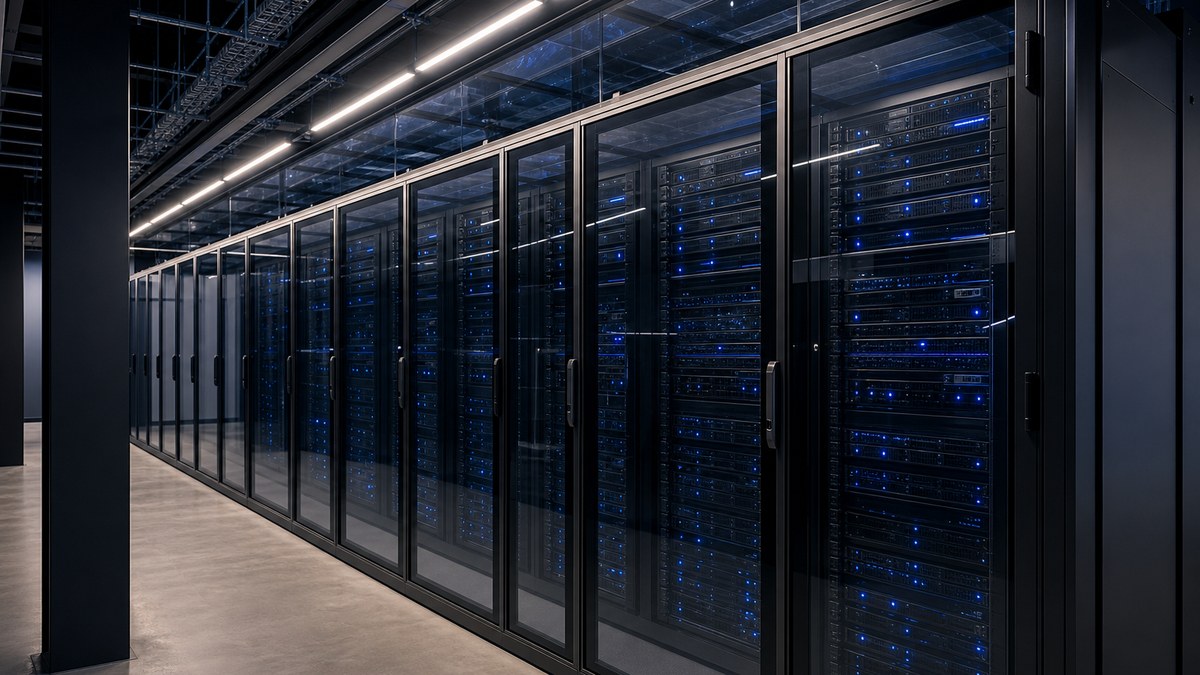
Most work happens on a vertical surface: the front or back of a rack, from the bottom rack unit to the top. Fixtures with asymmetric or wide-distribution optics push light sideways onto rack faces instead of straight down. A good photometric layout checks vertical illuminance at several heights, not just the light level on the floor. TIA-942 calls for working light levels of roughly 500 lux on the horizontal plane and 200 lux on the vertical plane in occupied areas; confirm the current edition and your own operating standards during design.
Coordinate with everything overhead
The ceiling of a data hall is crowded: cable trays, ladder racks, busway, containment panels, fire suppression piping, sprinkler heads, and detection. Fixtures need to be coordinated in the reflected ceiling plan so trays and containment do not block the light, and so fixtures stay clear of sprinklers and detectors. In many halls, fixtures hang from the same unistrut grid as the trays, which makes coordination early in design essential.
Hot aisle containment and high ambient temperatures
Hot aisles and enclosed containment run much warmer than a normal room. Fixtures and drivers in those zones should be rated for the ambient temperature they will actually see, not just a typical office. Under-rated drivers in hot aisles are a common cause of early LED failures.
Choosing LED fixtures for data centers
| Fixture type | Where it fits | What to look for |
|---|---|---|
| Linear aisle fixtures | Hot and cold aisles, white space | Rack-face optics, continuous-row capability, high-ambient rating |
| Strip and wraparound fixtures | Electrical, UPS, and mechanical rooms | Durable housings, easy mounting to unistrut, sensor-ready |
| LED high bays | Tall halls, warehouses, staging areas | Correct optics for mounting height, integrated sensors |
| Low-glare troffers and linear pendants | NOC, offices, conference and break rooms | Low glare for screens, dimming, good color rendering |
| Vapor-tight fixtures | Battery rooms, generator areas, wash-down spaces | Sealed construction suited to the environment |
| Emergency and exit fixtures | Every egress path | Self-diagnostics or central battery/inverter support |
| Area lights, wall packs, bollards | Perimeter, parking, entries | Full cutoff optics, uniformity, surge protection |
A few specification details matter more in a data center than elsewhere:
- Driver quality: quality LED drivers with low flicker and solid surge protection are worth it in an environment full of sensitive electronics.
- Electrical noise: ask for drivers that meet applicable FCC requirements for electromagnetic interference and keep good harmonic performance, so lighting does not add noise to the electrical system.
- Color rendering: a good color rendering index makes it easier to tell cable jacket colors and status LEDs apart.
- Color temperature: neutral to cool white, typically around 4000K to 5000K, is common in technical spaces; offices and break rooms can be warmer.
- Long life and modular parts: fewer replacements mean fewer escorted visits into controlled areas.
Mock up one aisle before ordering for the whole hall. Install two or three fixtures over a populated row, then check rack labels at the top and bottom rack units, the rear of the cabinets, and the view on any security cameras. It is the fastest way to confirm optics, spacing, and color before committing.
Lighting controls that fit how data centers run
Data halls are mostly empty. Technicians come and go, but for much of the day and night no one is in a given aisle. That makes controls one of the biggest opportunities in data center lighting, both for energy and for the heat lighting adds to the space.
- Occupancy sensors by aisle: lights come up as someone enters an aisle and step down or switch off after it is empty.
- Step-dimming instead of full off: many operators prefer a low background level so cameras keep a usable image and the hall never goes completely dark.
- Zoning: each aisle, room, and corridor on its own zone, so one technician does not light up an entire hall.
- Simple, maintainable logic: controls should be easy for the operations team to understand and service without a specialist on call.
- Networked lighting controls: on larger campuses, networked or DALI-based systems can report fixture status and energy use and connect to the building management system.
- Fail-safe behavior: if a sensor or control node fails, the default should be lights on, not lights off.
Energy codes in Texas also require automatic lighting controls in most new construction and major renovations. For the bigger picture on control strategies, see our guide to commercial lighting control systems in Irving.
Planning a data hall or an upgrade?
Tell us about your facility and we will follow up with ideas and a project-specific proposal.
Emergency and egress lighting: plan beyond the minimum
In a data center, losing normal power is not a rare event to plan around; it is a scenario the whole building is designed for. Emergency lighting needs the same mindset. Code-required egress lighting is the floor, not the goal. Technicians may need to work in the white space, electrical rooms, and generator areas while the facility is on backup power, so lighting in those spaces deserves careful thought.
- Egress paths: exit signs and emergency lighting along every route out of data halls, electrical rooms, and support areas, as required by the adopted fire and life safety codes.
- Critical work areas: consider emergency coverage at switchgear, UPS, and generator controls so staff can operate equipment during an event.
- Battery approach: local battery packs are simple, but in hot aisles and warm rooms, heat shortens battery life. Central battery or inverter systems keep batteries in a controlled room and simplify testing.
- Self-testing: self-diagnostic emergency fixtures or monitored central systems reduce the labor of required periodic testing and documentation.
- Generator-backed lighting: many facilities put part of the normal lighting on generator-backed circuits as well, coordinated with the electrical engineer.
Emergency lighting design should always be coordinated with the engineer of record and the local fire marshal. For a deeper look at code requirements, our upcoming guide on emergency and egress lighting for commercial buildings will cover testing and documentation.
Support spaces: NOC, docks and offices
Network operations center
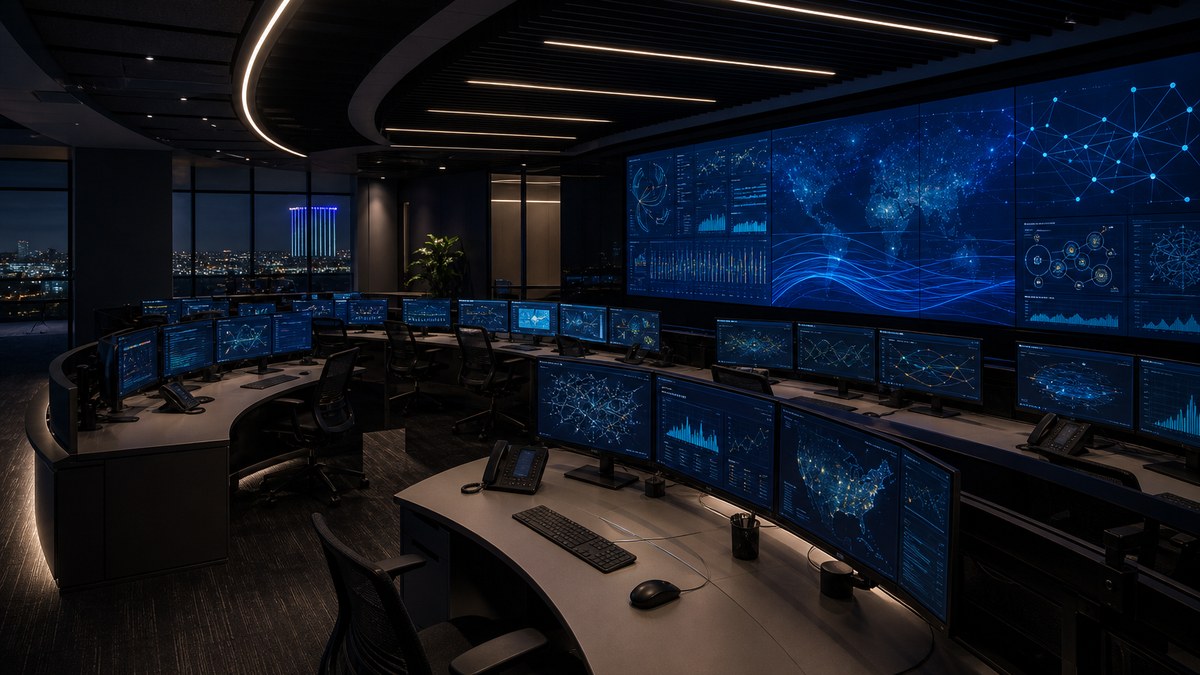
The NOC is staffed around the clock and filled with monitors and often a large display wall. Lighting here should be low-glare, dimmable, and arranged so fixtures do not reflect in screens. Indirect or well-shielded linear fixtures and separate zones near the display wall make long shifts more comfortable. If your NOC uses a display wall, our guide to LED video walls in Irving explains how lighting and video work together.
Loading dock and staging
New servers, racks, and power equipment arrive through the dock and staging rooms. These spaces need bright, even light for inspecting deliveries and reading labels, plus good dock door lighting. Many of the same principles apply as in our guide to warehouse and logistics lighting near DFW Airport.
Offices, break rooms and security
The people who keep a data center running spend long hours on site. Comfortable, low-glare lighting with good color in offices, break rooms, training rooms, and the security desk helps alertness and morale, especially on night shifts.
Exterior, perimeter and security lighting
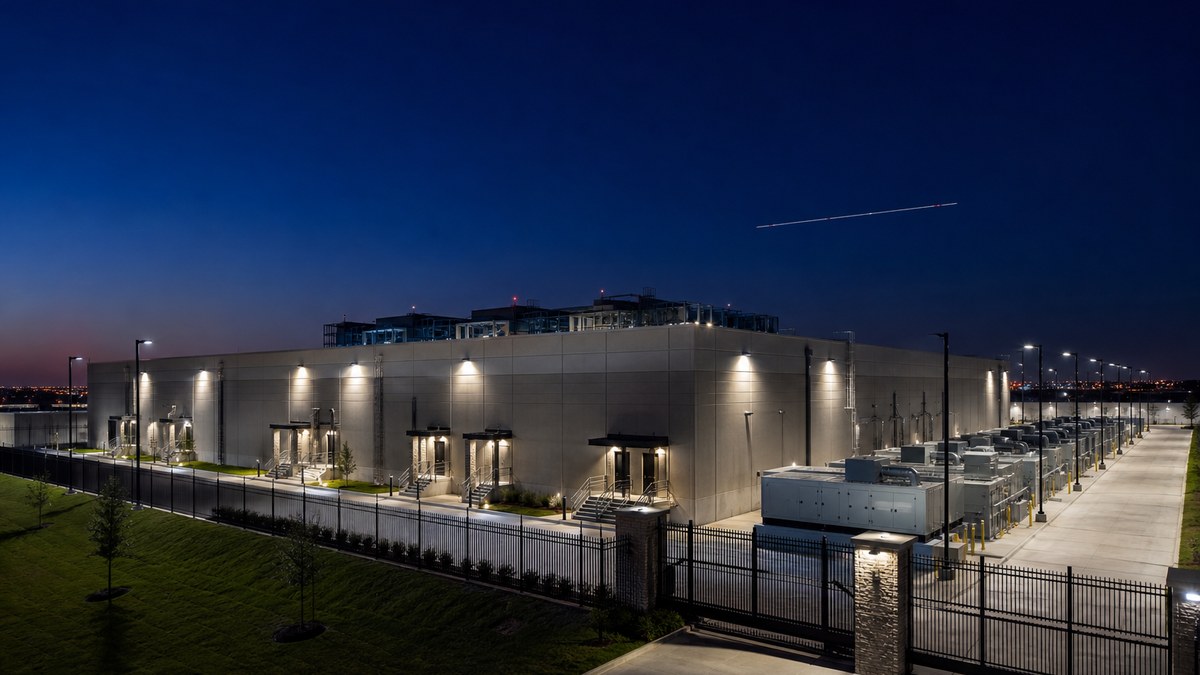
Data centers are security-sensitive sites, and the exterior lighting plan is part of the security design. The goal is uniform, glare-controlled light that supports cameras and patrols, without blinding guards or spilling onto neighbors.
- Perimeter fence lines: even light along fences and clear zones so cameras can see movement.
- Gates and guard houses: strong, glare-controlled light for vehicle and ID checks.
- Parking and walkways: safe, uniform lighting for staff arriving and leaving at all hours.
- Equipment yards: generators, fuel systems, transformers, and chillers need light for night maintenance.
- Building entries and docks: clear, well-defined entry points that cameras can cover.
- Controls: photocells and astronomical time clocks, with motion-based boost in low-traffic areas where appropriate.
Full cutoff fixtures, careful aiming, and a consistent color temperature across the site help cameras perform and keep the campus a good neighbor. See our guide to commercial outdoor LED lighting in Irving for more on parking and facade lighting, and our commercial landscape lighting guide for campus grounds.
Built for North Texas conditions
| Condition | What to specify |
|---|---|
| Hot aisles and enclosed containment | Fixtures and drivers rated for high ambient temperatures |
| Texas summer heat outdoors | Heat-tolerant drivers and good thermal design on exterior fixtures |
| Storms and lightning | Surge protection on exterior circuits and fixtures |
| Hail and wind | Impact-resistant lenses and secure pole and wall mounting |
| Dust in staging and yards | Sealed or vapor-tight fixtures where needed |
| Round-the-clock operation | Long-life LEDs and controls that reduce burn hours |
Upgrading lighting in a live data center
Many Irving facilities were built with fluorescent or early LED lighting and no meaningful controls. Upgrading is worthwhile, but in a live data hall the work itself has to be planned as carefully as the design. Operators rightly treat any work near production equipment as a risk to be managed.
- Survey and documentation. Walk every zone, document existing fixtures, circuits, controls, mounting conditions, and emergency lighting, and note problem areas.
- Design and photometrics. Lay out fixtures by aisle, check vertical light on racks, and plan control zones and emergency coverage.
- Mockup. Install a test aisle so operations staff can approve the result.
- Method of procedure (MOP). Write step-by-step procedures for each phase, including circuit isolation, dust control, ladder and lift use near racks, and rollback plans.
- Phased installation. Work aisle by aisle or room by room inside approved maintenance windows, with escorts and change control as the site requires.
- Controls programming and commissioning. Set sensor timeouts, background levels, and zones, and test fail-safe behavior.
- Emergency testing and documentation. Verify emergency lighting performance and hand over records and as-builts.
Retrofit kits can sometimes be used in existing housings, but in a data center, complete new fixtures with the right optics usually deliver much better vertical light on racks. Our guide to affordable commercial LED upgrades explains the trade-offs between retrofit kits and new fixtures.
New construction: bring lighting in early
For new data center buildings and expansions in Irving and the DFW Airport corridor, lighting works best when it is coordinated from schematic design. Early involvement lets the lighting layout follow the rack plan, keeps fixtures clear of cable trays and suppression systems, defines emergency lighting strategy with the electrical engineer, and sets the controls approach before the building management system is finalized. We support engineers, general contractors, and developers with fixture recommendations, cut sheets, photometric layouts, and coordination through construction.
Energy, heat and sustainability
Lighting is a small share of a data center's total power, but it is a share that is easy to reduce, and every watt of lighting becomes heat the cooling system must remove. LED fixtures combined with occupancy controls cut lighting energy and that added heat at the same time, which supports overall efficiency goals. Many operators also pursue green building certifications, where efficient lighting and controls can contribute. Depending on program availability, some upgrades may qualify for Oncor energy efficiency incentives; we can help you check what applies to your project.
Common data center lighting mistakes
- Office-style grids. Fixtures laid out without regard to rack rows leave rack faces in shadow.
- Ignoring vertical light. A bright floor does not mean readable labels at the top or bottom of a rack.
- Blocked fixtures. Cable trays and containment installed after lighting can cut light in half in some aisles.
- Under-rated drivers in hot aisles. Fixtures not rated for the real ambient temperature fail early.
- Overcomplicated controls. Systems the operations team cannot maintain end up overridden to always on.
- Lights-off failure modes. Controls that fail to off create real safety problems.
- Minimum-only emergency lighting. Code-minimum egress light may not be enough for staff working through a power event.
- Glare in the NOC. Fixtures reflecting in monitors make long shifts harder.
Why work with Irving LED Lights
We design, supply, install, program, and service commercial lighting across Irving, Las Colinas, Valley Ranch, and the DFW Airport corridor, from data halls and electrical rooms to offices, docks, and exterior site lighting, so every part of a facility works together. Our team brings 15+ years as an authorized architectural lighting dealer and project coordinator. Our licensed installation partner has completed over 200 major sports and commercial projects across the US and Canada — NFL, NBA, NHL, MLS, NCAA and NASCAR. Explore our commercial lighting services, including commercial LED lighting, architectural lighting, and lighting service and maintenance, or learn about our Luminance design-build program and our team. You can also see the areas we serve and our full service list.
Frequently Asked Questions
What is the best lighting for a data center?
How bright should a data center be?
Should data center lights be on all the time?
What color temperature is used in data centers?
Where should light fixtures go in a hot and cold aisle layout?
What emergency lighting does a data center need?
Can you upgrade lighting in a live data center?
How much does data center lighting cost?
Do LED lighting upgrades qualify for incentives in Irving?
What areas do you serve?
Let's light your data center
Request a consultation and we will follow up to schedule a site review of your facility.
Related
Our DFW lighting network: Dallas commercial LED lighting, Fort Worth LED lighting, Arlington LED lighting, Plano LED lighting, statewide Texas LED lighting, wholesale LED components, fiber optic starlight ceilings, 360° laser fiber optic lighting, commercial LED signage, modular building solutions, and Dallas modular structures.