Restaurant & Entertainment Lighting in Irving, TX: Dining Rooms, Bars, Patios & Music Venues
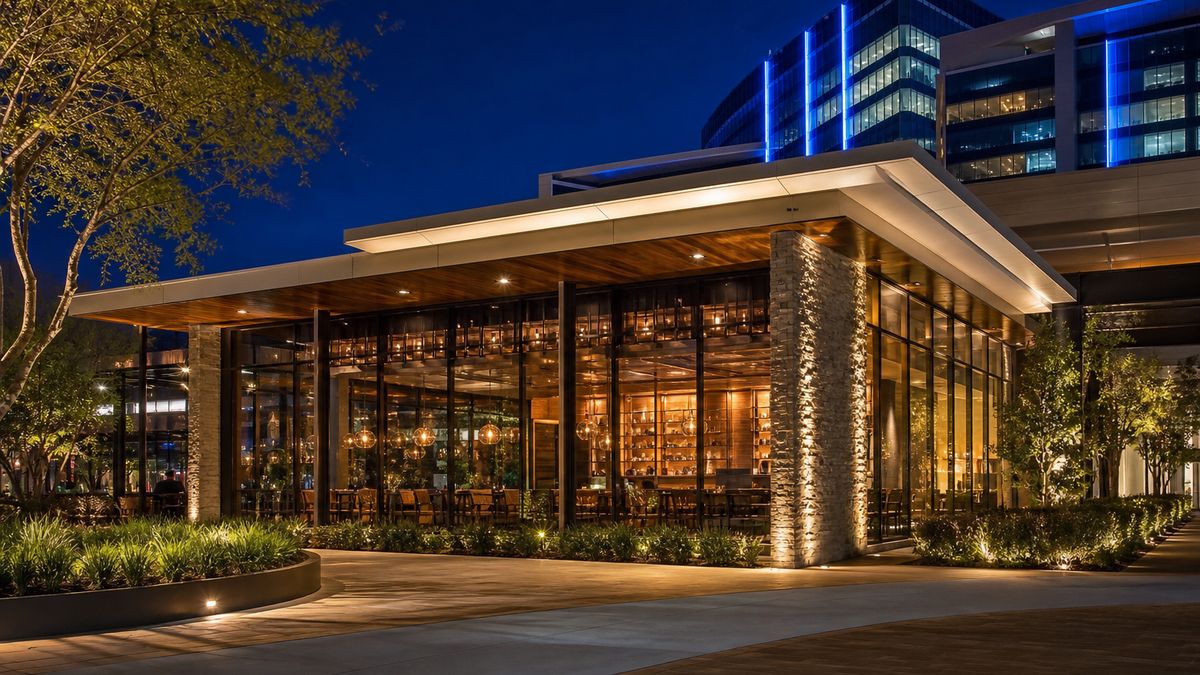
Restaurant and entertainment lighting in Irving shapes how guests feel from the moment they see a storefront glowing across a plaza to the last round at the bar. In Las Colinas, around the Toyota Music Factory, along the Urban Center canals and near the Irving Convention Center, restaurants, bars, lounges and live music venues compete for the same evening crowd. The venues that win are often the ones that look the most inviting after dark, and food and drinks that look great under the right light sell themselves.
This guide explains how to light restaurants, bars, patios and entertainment venues with modern LED fixtures and controls: the layers of light every dining room needs, color temperature and color rendering for food, bar and back-bar lighting, patio and plaza lighting for North Texas evenings, stage and event lighting, facades and signage, kitchens and back-of-house, controls and scenes, and how to plan a project around opening dates and service hours. It is written for restaurant owners, operators, developers, designers and property managers across Irving, Las Colinas, Valley Ranch and the DFW Airport corridor.
Great restaurant and entertainment lighting layers warm, dimmable LED light so food looks appetizing, guests look good, staff can work, and the room changes mood from lunch to late night.
- Layers: ambient, task, accent and decorative light working together
- Color: warm white (around 2700K–3000K) with high color rendering (CRI 90+) for food and faces
- Dimming: smooth, flicker-free dimming down to low levels for evening service
- Scenes: preset looks for lunch, dinner, late night, events and cleaning
- Outside: patio, plaza, facade and signage lighting that draws guests in
- Back-of-house: bright, cleanable, durable lighting for kitchens and prep areas
- Pricing: quoted per venue after a site visit — no one-size-fits-all numbers
Why lighting matters so much for restaurants and venues
Lighting is one of the few design elements that touches every part of the guest experience at once. It affects how food and drinks look, how comfortable people feel, how long they stay, how loud the room seems, and how the venue looks in photos that guests share. For operators it also affects staff productivity, cleaning, safety and energy use.
- Food presentation: good color rendering makes dishes look fresh and appetizing; poor light makes them look flat or gray.
- Atmosphere and brand: a fine-dining room, a sports bar and a cocktail lounge each need a different light signature.
- Guest comfort: glare from bare lamps or harsh downlights makes guests uncomfortable and shortens visits.
- Curb appeal: facades, windows and patios that glow at dusk pull foot traffic from plazas and parking.
- Social media: flattering light on faces and plates means better photos and more free promotion.
- Operations: kitchens, bars and service stations need clear task light to work fast and safely.
- Energy and maintenance: LED fixtures and controls reduce energy use and lamp replacements compared with older halogen and incandescent lighting.
The four layers of restaurant lighting
The best dining rooms never rely on one type of fixture. They combine several layers, each on its own control zone, so the room can be tuned for every daypart.
Ambient lighting
Ambient light sets the overall brightness of the room. In restaurants it usually comes from recessed downlights, cove lighting, indirect linear fixtures or decorative pendants. The goal is a soft, even base without bright hot spots. In evening service, ambient levels are often dimmed well down so accent and table light can take over.
Task lighting
Task light supports work: host stands, POS stations, bar wells, service stations, pass windows and menus. It needs to be bright enough for accuracy but shielded so it does not spill glare into guest areas.
Accent lighting
Accent light draws the eye: artwork, textured walls, wine displays, plants, architectural details and signature features. Narrow-beam adjustable fixtures and linear grazers create contrast that makes a room feel designed rather than simply lit.
Decorative lighting
Pendants, chandeliers, sconces, exposed-filament-style LED lamps and neon-style LED flex express the concept's personality. Decorative fixtures should look great but rarely carry the whole lighting load — when they do, rooms tend to be either too dim or too glary.
| Layer | Typical fixtures | Purpose |
|---|---|---|
| Ambient | Recessed downlights, coves, indirect linear, pendants | Overall comfort and base brightness |
| Task | Shielded downlights, under-cabinet and bar strips | Service stations, bars, host stands, passes |
| Accent | Adjustable spots, wall grazers, display lighting | Art, walls, wine and liquor displays, features |
| Decorative | Pendants, chandeliers, sconces, neon-style LED | Brand character and visual interest |
| Table / pinpoint | Narrow-beam downlights over tables | Food presentation and intimacy at each table |
Color temperature and color rendering for food and faces
Two specifications make or break restaurant lighting: color temperature (CCT) and color rendering (CRI and related metrics).
- Warm white for dining: around 2700K to 3000K feels inviting for most dining rooms and bars. Lower, candle-like tones can work for lounges and late-night bars, especially with warm-dim fixtures.
- Neutral white for work: kitchens, prep and dish areas usually use neutral white (around 3500K to 4000K) for clarity and cleanliness.
- High color rendering: specify CRI 90+ (with strong red rendering, often listed as R9) in guest areas. Reds in meats, tomatoes, wine and berries look rich instead of brown or muddy.
- Consistency: keep CCT consistent within a space. Mixing 2700K pendants with 4000K downlights makes rooms look patchy and unplanned.
Warm-dim (also called dim-to-warm) LED fixtures get warmer as they dim, the way incandescent lamps used to. They are a favorite for dining rooms and bars because the room naturally shifts from bright and crisp at lunch to glowing and intimate at dinner with a single dimmer.
Dimming and controls: one room, many moods
A restaurant's lighting needs change every few hours. Lunch calls for bright, energetic light; dinner calls for lower, warmer light; late night or events may call for dramatic accents and color. Cleaning crews need full brightness after close. Controls make all of that one button press away.
- Zoning: separate circuits or addressable groups for ambient, accent, decorative, bar, patio, facade and signage.
- Scenes: presets such as Lunch, Dinner, Late Night, Event, Game Day and Clean, recalled from a keypad, tablet or schedule.
- Astronomical time clocks: exterior and window lighting switches on at sunset all year without manual changes.
- Smooth, flicker-free dimming: drivers and dimmers must be compatible. Mismatched components are the most common cause of flicker, buzzing and lights that drop out at low levels.
- Protocols: 0-10V, phase dimming, DALI and DMX each have a place. DMX is common for color-changing and stage lighting; DALI and networked controls suit larger venues with many zones.
- Lock-outs: keypads with protected settings stop staff from accidentally leaving the room at the wrong level.
For a deeper dive into protocols and system types, see our guide to commercial lighting control systems in Irving.
Bar and back-bar lighting
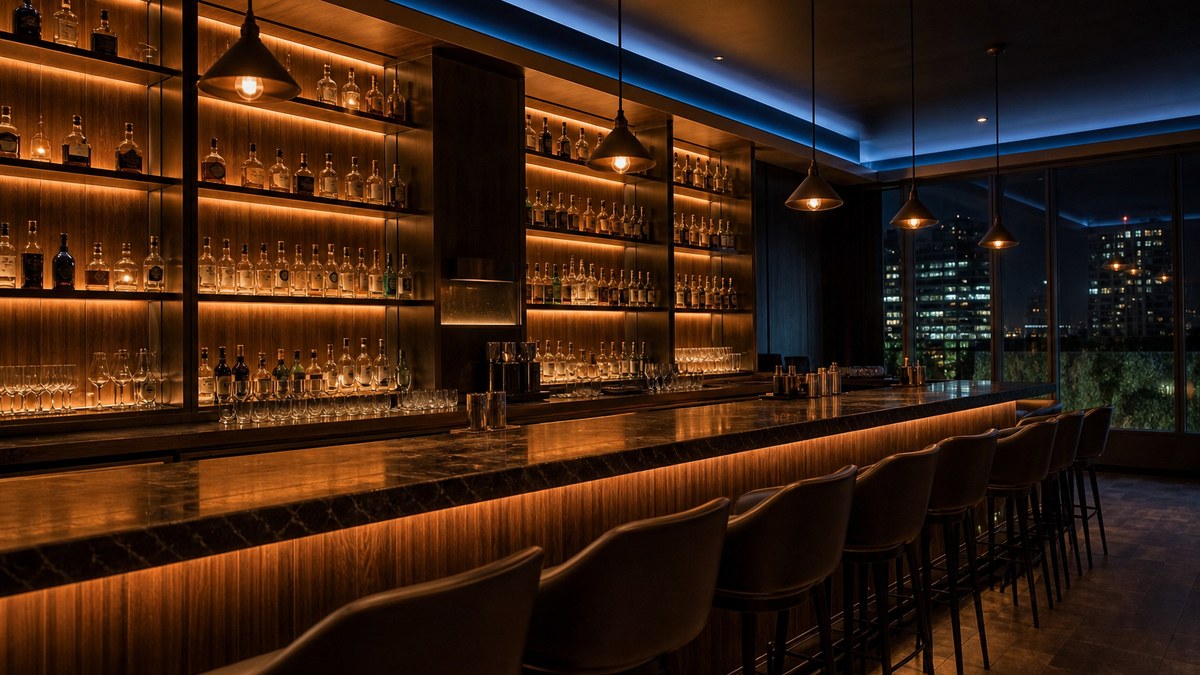
The bar is often the visual centerpiece of a restaurant or venue, and it is where lighting does the most work for revenue. A well-lit back bar showcases bottles and draws people to the counter; a well-lit bar top makes cocktails look photogenic.
- Back-bar shelving: concealed LED strips under or behind shelves backlight bottles so they glow. Tunable or color-capable strips can shift with events or brand moments.
- Bar top: narrow-beam downlights or low pendants put light on drinks without blinding guests or bartenders.
- Bar die and footrail: linear LED under the bar overhang adds depth and helps guests see steps and stools.
- Work wells: task lighting under the bar top helps bartenders pour, read tickets and clean quickly.
- Liquor and wine displays: display lighting with low heat output protects product while making it stand out.
Patios, rooftops and outdoor dining
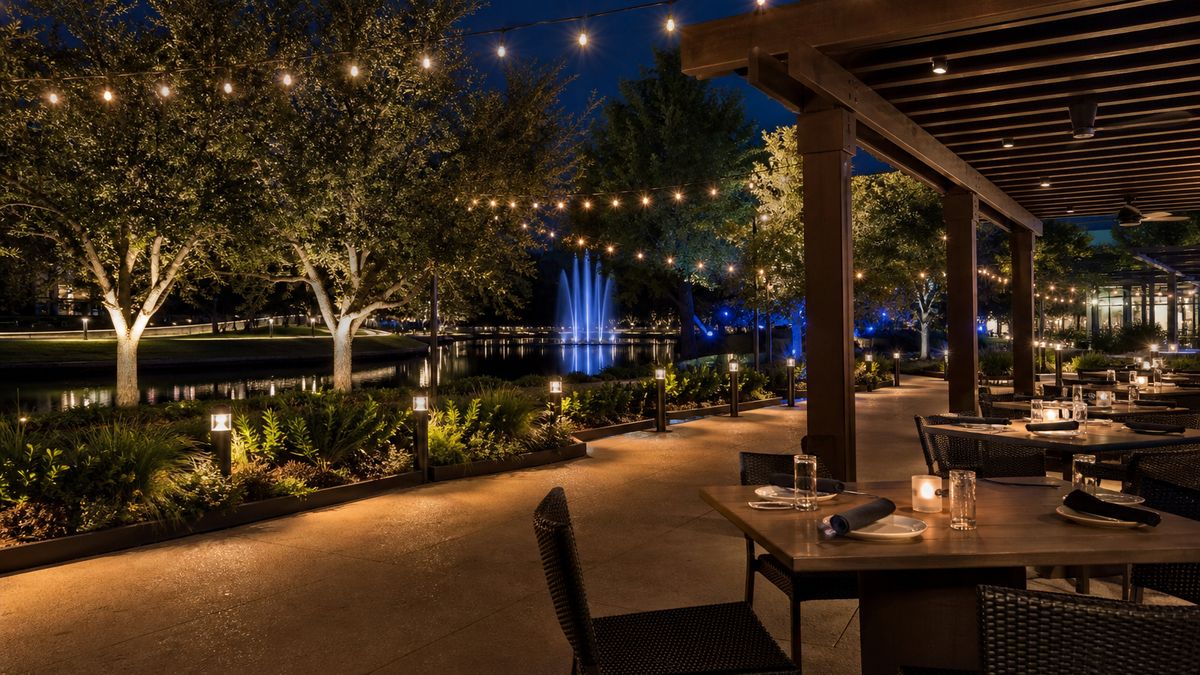
Irving's long warm season makes patios, rooftops and plaza seating some of the most valuable space a restaurant has. Lighting determines whether those seats stay full after sunset. Good outdoor dining lighting is warm, layered and low in glare:
- Overhead layers: outdoor-rated festoon or catenary lighting, pergola downlights and canopy lighting create a sense of enclosure.
- Table and edge light: low bollards, step lights and planter lighting define the edges of the patio and keep paths safe.
- Feature lighting: uplit trees, lit water features and grazed walls add depth and draw attention from across the plaza.
- Built for Texas weather: wet-location ratings, sealed connections, heat-tolerant drivers, UV-stable finishes and surge protection for storm season.
- Controls: dimming and scheduling so the patio can be bright for early evening service and softer later on.
- Neighbors and sky: shielded fixtures and warm color reduce glare and light trespass toward residences and hotel rooms.
Landscape and grounds techniques are covered in our guide to commercial landscape lighting in Irving, and facades and site lighting in commercial outdoor LED lighting.
Make your venue glow after dark
Tell us about your restaurant, bar or venue and we will follow up with ideas and a project-specific proposal.
Entertainment venues, stages and event spaces
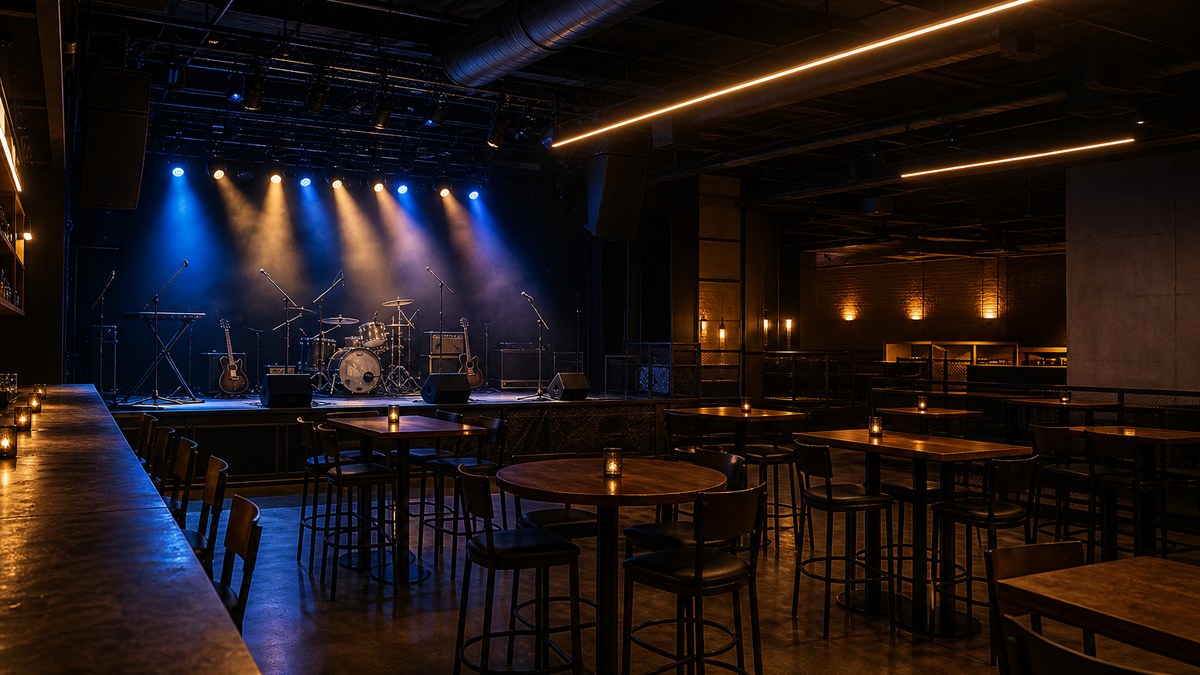
Live music venues, sports bars, event rooms and entertainment concepts need lighting that goes beyond dining. They need to switch from a bright, open room for setup to a focused, dramatic look for showtime, and back to full brightness for clearing out.
Stage and performance lighting
Small stages benefit from front light for performers' faces, backlight and color washes for depth, and DMX control so scenes can be programmed and recalled. LED stage fixtures run cooler and use far less power than older theatrical lamps.
Color and effects
RGB and RGBW fixtures, linear color washes and pixel-mapped LED add energy for concerts, game nights and private events. The key is a control system that also returns the room to clean warm white for regular service.
LED video walls and displays
Sports bars and event spaces increasingly use LED video walls for games, menus, sponsor content and stage backdrops. Brightness, pixel pitch and viewing distance should be matched to the room. Our guide to LED video walls in Irving covers how to choose one, and our video wall services handle design and installation.
Private dining and event rooms
Event rooms need flexible scenes for presentations, dinners and receptions, with dimmable ambient light, accent on the head table or stage, and controls that event staff can operate without training.
| Venue type | Lighting priorities | Typical controls |
|---|---|---|
| Fine dining | Warm, low ambient; pinpoint table light; art and wall accents; very low glare | Warm-dim, scene keypads, schedules |
| Casual dining / fast casual | Brighter, even light; clear menu boards; welcoming storefront | Daypart scenes, time clocks |
| Cocktail bar / lounge | Backlit back bar; intimate warm tones; dramatic accents | Deep dimming, color accents |
| Sports bar | Even light that does not wash out screens; bright bar; game-day scenes | Scenes, video wall integration |
| Live music venue | Stage light, color washes, house light that can go to full for clearing | DMX plus house lighting control |
| Rooftop / patio | Warm overhead layers, edge and step light, weather-rated fixtures | Astronomical clock, dimming |
| Hotel restaurant | All-day transitions from breakfast to bar; coordinated with lobby | Networked scenes and schedules |
Facades, storefronts and signage
In an entertainment district, the facade is the first menu guests read. Lit storefronts, canopies, columns and signs tell people from across the plaza that a venue is open and worth walking to.
- Storefront glazing: interior lighting near the windows should be layered and warm so the room looks lively from outside.
- Canopies and entries: soft downlighting at doors and host areas welcomes guests and supports security cameras.
- Architectural accents: grazing on columns and textured walls, and linear outlines on edges, add identity without glare.
- Color-capable facades: RGBW fixtures let venues celebrate holidays, teams and events, then return to white.
- Signage: LED channel letters, neon-style LED flex and digital displays should be coordinated with facade lighting and local sign rules.
For signs and digital displays, see our LED signage services and our national partner for custom LED signage.
Kitchens and back-of-house
Back-of-house lighting is about clarity, safety and cleanability, not mood. Cooks need to see color and doneness accurately, read tickets and spot spills. Practical guidelines:
- Bright, even light over cooklines, prep tables and dish areas, with neutral white color for clarity.
- Enclosed, gasketed and cleanable fixtures rated for the environment, with shatter-resistant lenses where food is prepared, following health department and code requirements.
- Hood lighting rated for the heat and grease of the hood environment.
- Walk-in coolers and freezers with LED fixtures designed for cold and damp conditions.
- Good color rendering on the pass so plates look the same in the kitchen as they do in the dining room.
- Storage, corridors and restrooms with occupancy sensors to save energy where code allows.
Glare, comfort and the guest's eye
Glare is the most common complaint about restaurant lighting and the easiest to avoid with the right specification. Guests should see glowing surfaces, not bright points of light.
- Use deep-regressed or well-shielded downlights so the light source is not visible from the table.
- Aim accent lights at walls and features, not across sightlines.
- Choose diffused decorative pendants or dim them to a comfortable level.
- Avoid bright light directly over booth seat backs where it hits guests' eyes.
- Balance brightness: dark ceilings with a few bright spots feel dramatic but can tire eyes; a little soft vertical light on walls makes rooms feel comfortable.
- Check screens and mirrors for reflections before finalizing aiming.
Energy, code and incentives
Restaurants often run lighting for long hours every day, which makes LED lighting and controls a practical energy upgrade. Replacing halogen, incandescent and older fluorescent fixtures with quality LED can reduce energy use and heat load in the room, which also eases the burden on air conditioning during Texas summers. Lighting projects in commercial buildings need to follow the applicable energy code and electrical code, which can include requirements for controls and lighting power. Some upgrades may qualify for utility incentive programs through Oncor, depending on program availability and project details. We review this during the proposal stage and include what applies.
If budget is a priority, our guide to affordable commercial LED lighting upgrades in Irving explains how to phase a project and focus first on the areas guests notice most.
New build vs renovation vs refresh
New restaurant build-outs
For new venues, lighting should be designed alongside the interior design, ceiling plan, millwork and AV. Early coordination puts power, blocking, control wiring and fixture locations in the right places before ceilings close, which avoids rework and delays to opening day.
Renovations and concept changes
When a space changes concept, lighting is one of the most effective ways to signal the change. Existing circuits can often be reused while fixtures, controls and decorative lighting are replaced to suit the new brand.
Lighting refresh
Many restaurants can transform their atmosphere without a full remodel: replacing glary downlights with high-CRI dimmable LED, adding back-bar and accent lighting, installing a scene controller and upgrading patio lighting. A refresh can often be scheduled around service hours to minimize closures.
Planning a restaurant or venue lighting project
- Discovery visit. We walk the space, ideally during service, to see how it is used and where the lighting falls short.
- Concept and brand goals. We talk through mood, dayparts, events, signature features and what guests should notice first.
- Lighting design. Fixture selection, layers, zones, scenes, color temperature and controls, coordinated with your designer or architect.
- Mockups and samples. Key fixtures and colors tested on site, especially for food presentation and the bar.
- Proposal. A clear scope and a project-specific quote — every venue is different, so we do not publish one-size-fits-all pricing.
- Scheduling around service. Installation phased overnight, before opening or on closed days to protect revenue.
- Installation. Coordinated with electricians, general contractors and AV vendors.
- Programming and night aiming. Scenes, schedules and final aiming set after dark with the operator.
- Training and support. Staff walkthrough of keypads and scenes, plus service and maintenance afterward.
Common restaurant lighting mistakes
- One circuit for everything. Without zones and scenes, the room cannot change from lunch to dinner.
- Low color rendering. Cheap fixtures make food, drinks and people look dull.
- Mixed color temperatures. Different whites in one room look accidental.
- Incompatible dimmers. Flicker and buzzing undermine the whole design.
- Too dark to read the menu. Atmosphere should never stop guests from reading or seeing their food.
- Glary patios. Bright unshielded floodlights on a patio feel like a parking lot, not a dining space.
- Ignoring the exterior. A great dining room that looks dark from the plaza loses walk-in traffic.
- Forgetting maintenance. Hard-to-reach fixtures and non-standard parts make simple repairs slow and expensive.
Coordinating with hotels, offices and mixed-use
Many Irving restaurants sit inside hotels, office towers and mixed-use developments, which means lighting has to work with the building around it. Restaurant lighting in a hotel should flow naturally from the lobby — see our guide to hotel lighting in Irving and Las Colinas. Amenity cafes and food halls in office buildings connect to the approach in our guide to Class A office lighting upgrades. And because guests often arrive by car, the route from the parking garage to the front door is part of the experience too.
Why work with Irving LED Lights
We design, supply, install, program and service commercial lighting across Irving and Las Colinas — from dining rooms and bars to patios, facades, signage, video walls and controls — so every part of the venue works together. Our team brings 15+ years as an authorized architectural lighting dealer and project coordinator. Our licensed installation partner has completed over 200 major sports and commercial projects across the US and Canada — NFL, NBA, NHL, MLS, NCAA and NASCAR. For larger transformations, our Luminance design-build program takes a venue from concept to programmed, finished lighting. Learn more about us, browse our commercial lighting services, or read our Las Colinas commercial LED lighting guide.
Frequently Asked Questions
What is the best color temperature for restaurant lighting?
Why does CRI matter in restaurants?
How much does restaurant lighting cost in Irving?
Can LED lighting dim as smoothly as incandescent?
What are lighting scenes and does my restaurant need them?
How should a restaurant patio be lit?
Can lighting work be done without closing the restaurant?
Do LED lighting upgrades qualify for incentives in Irving?
Do you light live music venues and sports bars?
What areas do you serve?
Let's light your restaurant or venue
Request a consultation and we will follow up to schedule a site visit and prepare a project-specific quote.
Related
Our DFW lighting network: Dallas commercial LED lighting, Fort Worth LED lighting, Arlington LED lighting, Plano LED lighting, statewide Texas LED lighting, wholesale LED components, fiber optic starlight ceilings for private dining rooms and lounges, 360° fiber optic lighting, premium pool lighting for rooftop and amenity decks, modular building solutions, and Dallas modular structures.