Lighting Controls & Energy Code Compliance in Irving, TX: IECC, ASHRAE 90.1 & What Inspectors Check
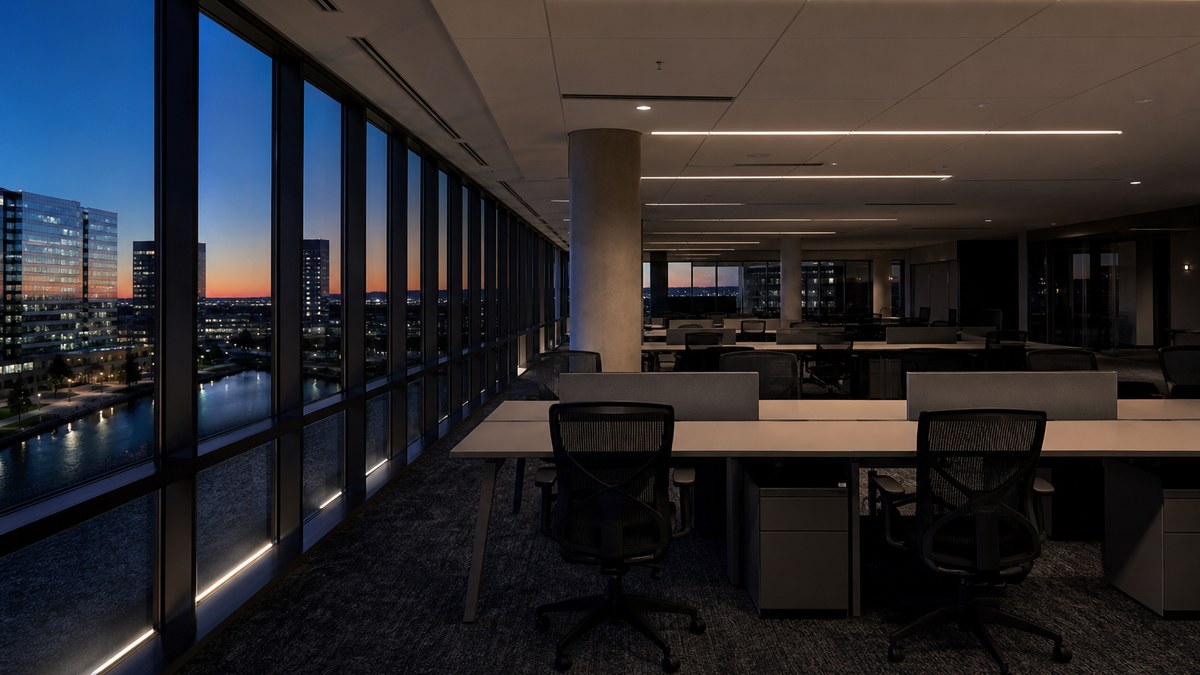
Lighting controls energy code compliance in Irving is no longer a box to tick at the end of a project. Whether you are building out a tenant floor in Las Colinas, retrofitting a warehouse near DFW Airport, or renovating a hotel lobby, the energy code decides which occupant sensors, time switches, daylight controls, dimming and exterior controls must be installed, and the building inspector will check them before you get a certificate of occupancy. Getting it right in design avoids failed inspections, change orders and rework on ceilings that are already closed.
This guide explains, in plain language, how the International Energy Conservation Code (IECC) and ASHRAE Standard 90.1 apply to commercial lighting in Texas, which code editions are relevant in Irving, what the major control requirements are, what changed in the 2024 IECC, and how to plan a lighting project that passes inspection and still works the way your people want it to. It is written for property owners, facility managers, tenant-improvement teams, architects and contractors. It is general guidance, not legal or engineering advice, so always confirm the edition and local amendments in force with the City of Irving for your permit date.
Commercial projects in Irving must meet the energy code adopted for their permit, which sets mandatory lighting control requirements on top of lighting power limits.
- Which code: Texas sets a statewide minimum based on the IECC (with ASHRAE 90.1 as the alternative path), and cities such as Irving can adopt newer editions with local amendments.
- Occupant sensors: required in many space types, such as offices, conference rooms, restrooms, storage and break rooms.
- Time-switch controls: automatic shutoff for spaces without occupant sensors, with limited overrides.
- Daylight-responsive controls: dimming of lights near windows and skylights in daylight zones.
- Dimming / light reduction: occupants can lower light levels; the 2024 IECC requires continuous dimming in many spaces.
- Exterior controls: dusk-to-dawn operation plus automatic reduction late at night or when areas are inactive.
- Commissioning: functional testing and documentation of controls before occupancy.
- Pricing: every project is quoted after a site review and code check.
Why lighting controls are at the center of the energy code
LED fixtures have already cut the wattage of most commercial lighting. Because of that, energy codes have shifted focus from "how many watts are installed" to "how many hours those watts actually run." Controls are how a building turns lights off in empty rooms, dims them when daylight is available, and reduces them late at night. That is why every recent edition of the IECC and ASHRAE 90.1 has added or tightened control requirements, and why controls are often the part of a lighting submittal that plan reviewers and inspectors look at most closely.
For owners, the code is also a useful baseline. A code-compliant control system typically means lower operating hours, longer fixture life, better comfort and data you can use. Many of the same strategies we describe in our guide to commercial lighting control systems in Irving are exactly what the code asks for.
Which energy code applies in Irving, Texas?
Texas handles commercial energy codes at two levels:
- Statewide minimum. The State Energy Conservation Office (SECO) adopts the commercial energy code for Texas. The U.S. Department of Energy's state profile lists the Texas commercial code as the 2015 IECC, with ASHRAE 90.1-2013 as the equivalent path. In 2025 the Legislature passed Senate Bill 783, which allows SECO to resume rulemaking toward the 2021 IECC, so the state baseline is expected to move forward.
- Local adoption. Texas cities may adopt newer editions of the International Codes with local amendments. The City of Irving published proposed ordinances to adopt the 2024 International Codes, including the International Energy Conservation Code, with local amendments.
In practice, the edition that applies to your project is the one in force for your permit application date, including any Irving amendments. Projects that started design under an older edition can be caught out when the permit is filed after a new code takes effect. We always confirm the applicable edition with the building official at the start of design, and so should every project team.
The IECC allows commercial buildings to comply either with the IECC's own commercial provisions or with ASHRAE Standard 90.1 (the edition referenced by the adopted IECC). Pick one path and stay on it: mixing requirements from both in the same submittal is a common reason for plan-review comments.
The core lighting control requirements, explained
Section numbers and exact thresholds differ between editions, but the IECC and ASHRAE 90.1 share the same building blocks. Here is what each one means on a real project.
1. Manual area controls
Each space needs its own readily accessible control so occupants can turn the lights on and off. The control should be located in the space or where occupants can see the lights it controls. In large open areas, separate controls are typically required for smaller zones rather than one switch for a whole floor.
2. Occupant sensor controls
Occupant sensors (also called occupancy or vacancy sensors) are required in many space types, including private offices, conference and meeting rooms, classrooms, break rooms, restrooms, storage rooms, copy rooms and similar spaces. Requirements typically include automatic shutoff within a short time after the space is vacated, and either manual-on operation or automatic-on to a reduced level so lights do not jump to full output every time someone walks by. Open offices and warehouse aisles often have their own rules, such as zoned control or automatic reduction of lighting power in unoccupied zones.
3. Time-switch controls
Spaces that do not require occupant sensors generally need time-switch controls, so lighting turns off automatically on a schedule. These controls need a manual override that is limited in duration and area, so a single after-hours user does not leave a whole floor lit all night. The 2024 IECC adds that where no schedule is set, the system must keep lights off for at least 12 hours per day.
4. Daylight-responsive controls
Where windows or skylights bring in enough daylight, the general lighting in those daylight zones (sidelit areas next to windows and toplit areas under skylights) must dim automatically in response to available daylight. Codes typically require continuous dimming down to a low level, separate control of primary and secondary sidelit zones, and calibration after installation. Glass-heavy office towers along the Las Colinas canals and Urban Center are classic examples where daylight controls apply on almost every perimeter bay.
5. Light reduction and dimming controls
Occupants must be able to reduce connected lighting in many spaces. Older editions accepted bilevel switching (for example, switching alternate fixtures). The 2024 IECC replaces this with continuous dimming for general lighting in listed spaces, from full output down to 10% or less, plus off. With LED fixtures and 0-10V, DALI or networked drivers, this is straightforward if it is specified from the start.
6. Specific application controls
Display and accent lighting, supplemental task lighting, under-cabinet lights and lighting for non-visual purposes typically need separate control from the general lighting so they can be scheduled or turned off independently. Hotel guest rooms have their own rules, covered below.
7. Exterior lighting controls
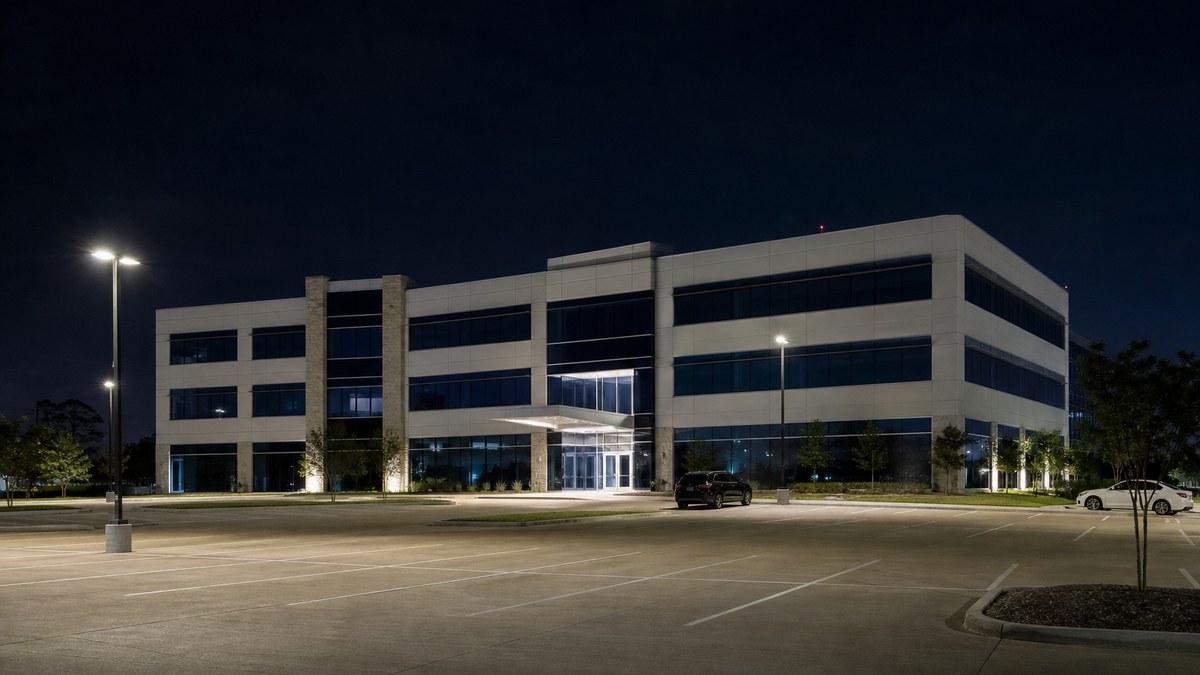
Exterior lighting must be off during daylight (photocell or astronomical time switch) and, for most building and site lighting, automatically reduced during late-night hours or when no activity is detected for a period of time. Facade and landscape accent lighting is typically scheduled off overnight. Lighting required for security, safety or code-required egress may be exempt from some reductions, but the design should document why. See our guides to commercial outdoor LED lighting and commercial landscape lighting in Irving for how this fits into a full site design.
8. Parking garage controls
Enclosed and structured parking typically requires automatic reduction of lighting power when zones are unoccupied, separate daylight control near perimeter openings, and automatic transition lighting at entries. Our guide to parking garage LED lighting in Irving walks through these zones in detail.
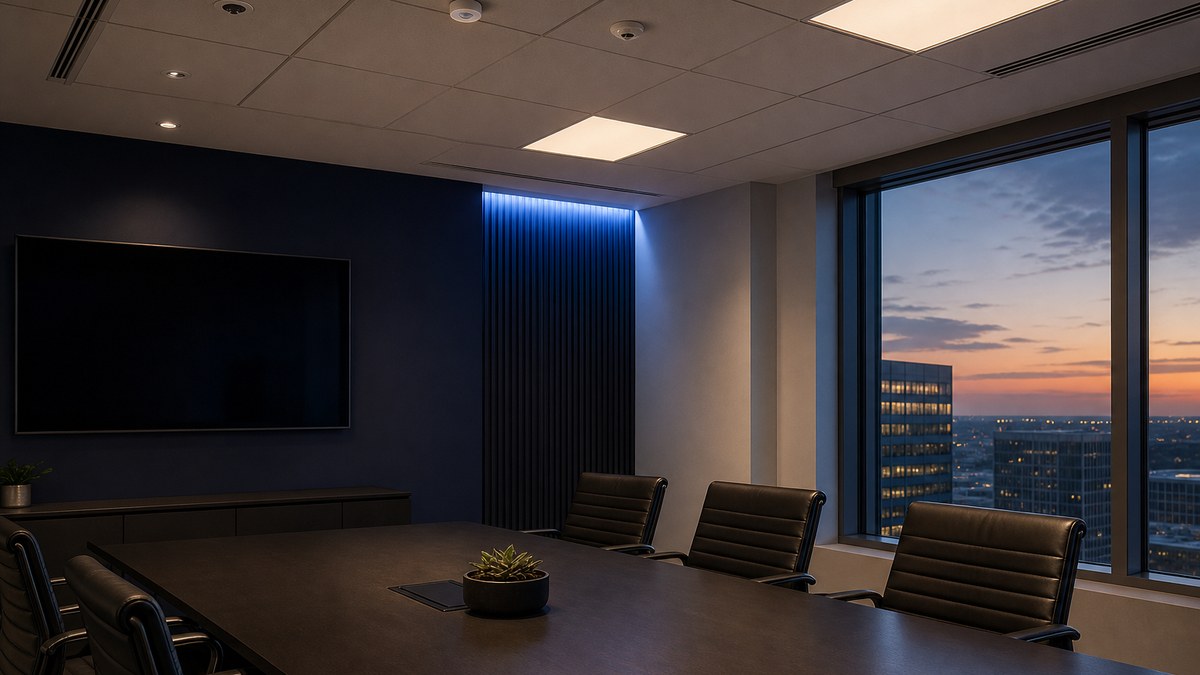
Control requirements by space type
The table below summarizes how the main strategies usually map to common commercial spaces. Exact requirements depend on the edition and path you use, so treat this as a planning checklist, not a substitute for the code text.
| Space | Typical required controls | Design notes |
|---|---|---|
| Private offices | Occupant sensor, manual control, dimming, daylight control at windows | Manual-on or partial-on keeps lights from switching on for brief visits |
| Open offices | Zoned occupant control or time switch, dimming, daylight zones | Networked controls make zoning and daylight bands easier to tune |
| Conference rooms | Occupant sensor, dimming, separate display / AV lighting control | Preset scenes for presentations and video calls |
| Restrooms, storage, break rooms | Occupant sensor with automatic shutoff | Sensor coverage must reach stalls and corners |
| Corridors and lobbies | Time switch or occupant-based reduction, daylight control at glazing | Egress lighting levels must still be maintained |
| Warehouses | Occupant-based reduction in aisles and open areas, daylight control at skylights | Sensors on each high bay or aisle zone |
| Hotel guest rooms | Automatic shutoff of lights and switched receptacles after vacancy | Captive key or occupancy-based room controls |
| Parking garages | Occupant-based reduction, daylight control at openings, transition lighting | Sensors integrated into each fixture simplify zoning |
| Exterior building and site | Daylight off, scheduled or activity-based reduction overnight | Keep security zones documented |
What changed in the 2024 IECC
Because Irving has moved toward the 2024 International Codes, it is worth knowing the main lighting changes in that edition. Industry summaries of the 2024 IECC highlight:
- Lower lighting power allowances for many interior and exterior applications, with some significant exterior reductions.
- Alterations scope changes: the old exemption for replacing a small share of interior luminaires was removed, and a small-project exemption was added for limited exterior work.
- More spaces need occupant sensors, including computer rooms, medical supply rooms, laundry areas and telemedicine rooms.
- Continuous dimming replaces bilevel switching for general lighting in many space types, dimming to 10% or less plus off, with controls that are readily accessible.
- Time switches must keep lights off at least 12 hours per day where no schedule is programmed.
- A dedicated section for sleeping and dwelling units: hotel and motel guest rooms need automatic shutoff of lighting and switched receptacles within 20 minutes of vacancy, with a captive-key option in some smaller rooms.
- Additional efficiency options were revised, adding options such as high-end trim, extended occupant sensor use and demand-responsive controls.
- Functional testing of lighting controls is required before occupancy.
If your project is being permitted under an older edition, many of these items are still good practice and future-proof the space for the next renovation.
Get a lighting and controls code check
Send us your plans or tell us about your space, and we will review the control requirements and prepare a project-specific proposal.
Retrofits and alterations: when do the rules apply?
One of the most common questions we hear from Irving property managers is whether a simple LED upgrade triggers the energy code. The answer depends on what you change:
- Lamp-only replacements in existing fixtures are often treated differently from replacing whole luminaires, but local interpretation matters.
- Replacing luminaires or rewiring lighting circuits generally brings the altered area under the code's lighting power and control requirements, and the 2024 IECC tightened this scope.
- Tenant improvements that reconfigure walls, ceilings or lighting layouts are typically treated as alterations that must comply for the affected spaces.
- Change of occupancy or use can trigger requirements for the whole space.
Planning matters here: adding sensor-ready or networked drivers during a retrofit usually costs far less effort than going back into ceilings later. Our guide to affordable commercial LED lighting upgrades in Irving covers how to phase upgrades sensibly, and our Class A office lighting upgrades guide covers tenant floors specifically.
Choosing the right control technology
Code requirements describe what controls must do, not which product to buy. The main options:
| Approach | Best for | Considerations |
|---|---|---|
| Standalone room controls (wall sensors, 0-10V dimmers) | Small offices, restrooms, storage, simple tenant spaces | Simple and familiar; harder to adjust schedules across a building |
| Networked lighting controls | Office floors, campuses, warehouses, multi-tenant buildings | Central schedules, reporting, easy re-zoning when tenants change |
| Sensors integrated into fixtures | Open offices, warehouses, parking garages | Fine-grained zoning and occupancy data with fewer wall devices |
| DALI / digital addressable systems | Hotels, premium offices, architectural spaces | Individual fixture control, scenes, status feedback |
| DMX / architectural scene control | Facades, lobbies, event spaces, color-changing features | Pair with code-required schedules and overnight reduction |
Many Irving buildings combine these: a networked system for general lighting, DMX for facade or lobby features, and integration with the building automation system for schedules. For lobby media and display lighting, see our guide to LED video walls in Irving.
Lighting power density: the other half of compliance
Controls are mandatory, but projects must also stay within the code's lighting power allowance, expressed in watts per square foot for interior spaces and allowances for exterior areas. Compliance is usually shown either with the building area method (one allowance for the whole building type) or the space-by-space method (allowances for each room type, which often gives more flexibility). Exterior allowances depend on lighting zone and the area being lit, such as parking, walkways, entries and facades.
Efficient LED fixtures make the wattage limits achievable in most spaces, but decorative fixtures, accent lighting and high-ceiling spaces such as hotel ballrooms or atriums can push a design over the allowance if they are not planned carefully. Many teams use the U.S. Department of Energy's COMcheck software to document both lighting power and control compliance for permit.
Functional testing and commissioning
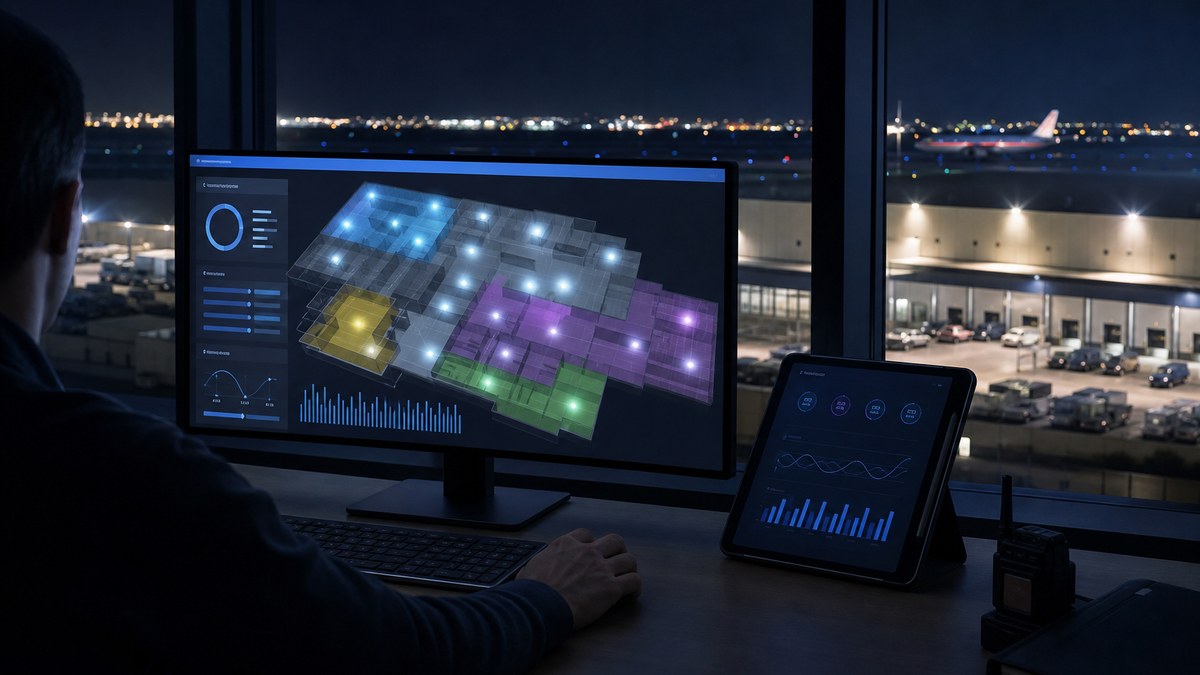
Controls that are installed but not set up correctly do not save energy and frustrate occupants. That is why codes require functional testing and documentation, and why the 2024 IECC expanded it. A good commissioning process includes:
- Sensor placement check: confirm coverage of the whole space and no false triggers from corridors or HVAC airflow.
- Time delays and modes: verify shutoff times, manual-on or partial-on settings and override durations.
- Daylight calibration: set target levels for each daylight zone so perimeter lights dim smoothly without visible jumps.
- Schedules: program time switches, holidays and after-hours overrides to match how the building is actually used.
- Exterior controls: test dusk-to-dawn operation and overnight reduction levels.
- Documentation: record settings, provide as-built control diagrams, operating instructions and a maintenance schedule to the owner.
We also recommend a follow-up visit after occupancy, because real use always reveals a few rooms where delays, levels or scenes need fine-tuning.
Common reasons lighting fails plan review or inspection
- Missing occupant sensors in small rooms such as storage, copy and electrical rooms.
- Daylight zones not shown on drawings, or perimeter fixtures wired on the same circuit as interior fixtures.
- No overnight reduction for exterior building and parking lighting.
- Accent and display lighting on the same control as general lighting.
- Mixed compliance paths (IECC and ASHRAE 90.1 requirements combined in one submittal).
- Lighting power over the allowance because decorative fixtures were added late.
- No functional testing report or control documentation at final inspection.
- Wrong edition: the design followed an older code than the one in force at permit.
Hotels, warehouses and data-heavy facilities: special cases
Hotels
Guest rooms need automatic shutoff of lighting and switched receptacles when rooms are vacant, while public areas such as lobbies, ballrooms and corridors follow the general rules with scenes for events. Read more in our guide to hotel lighting in Irving and Las Colinas.
Warehouses and logistics
High-bay areas typically need automatic reduction in unoccupied aisles and daylight control under skylights. Sensor-equipped high bays make this practical. See our guide to warehouse and logistics lighting near DFW Airport.
Data centers and mission-critical spaces
White space, support rooms and network operations centers have their own operational needs, and the 2024 IECC adds computer rooms to the occupant-sensor list. Our data center lighting guide explains how to balance code, security and operations.
Restaurants and entertainment
Dining rooms, bars and patios use dimming and scenes heavily, so controls can satisfy the code while supporting atmosphere. See restaurant and entertainment lighting in Irving.
Energy savings and utility incentives
Code-compliant controls usually reduce lighting operating hours and energy use compared with lights that run on simple switches, and those savings add up across large floor plates and long operating hours. Savings depend on how a building is used, so we evaluate each project individually rather than promise numbers. Projects in Irving may qualify for commercial energy-efficiency incentive programs offered through Oncor, depending on program availability and eligibility at the time of the project. We can help you check what is available before the scope is finalized.
How we plan a code-compliant controls project
- Code and scope check: confirm the applicable code edition, compliance path and whether the work is new construction, an alteration or a retrofit.
- Site review: walk the space, note windows and skylights, ceiling conditions, existing wiring and how people use each area.
- Control narrative: a simple description of how each space type will be controlled, which helps owners, designers and reviewers agree before drawings.
- Fixture and control selection: LED fixtures, drivers and sensors chosen to meet both lighting power and control requirements.
- Proposal: a clear scope and project-specific quote.
- Installation and programming: coordinated with electrical contractors and the general contractor.
- Functional testing and documentation: testing, calibration and owner handover.
- Support: tuning after occupancy and adjustments as tenants change.
Why work with Irving LED Lights
We design, supply, install, program and service commercial lighting and controls across Irving, Las Colinas, Valley Ranch and the DFW Airport corridor, from tenant floors and lobbies to warehouses, garages and exteriors. Our team brings 15+ years as an authorized architectural lighting dealer and project coordinator. Our licensed installation partner has completed over 200 major sports and commercial projects across the US and Canada — NFL, NBA, NHL, MLS, NCAA and NASCAR. Explore our commercial lighting services, our Luminance design-build program, or learn more about us. For a broader overview of the local market, see our Las Colinas commercial LED lighting guide.
Frequently Asked Questions
What energy code applies to commercial lighting in Irving, TX?
What lighting controls does the energy code require?
Does an LED retrofit have to meet the energy code?
What is the difference between the IECC and ASHRAE 90.1?
What changed for lighting controls in the 2024 IECC?
Are daylight sensors required near windows?
Do exterior and parking lot lights need controls?
Do networked lighting controls help with code compliance?
How much does a code-compliant lighting controls project cost?
What areas do you serve?
Pass inspection with smarter lighting
Request a consultation and we will review your code requirements, your space and your goals.
Related
Our DFW lighting network: Dallas commercial LED lighting, Fort Worth LED lighting, Arlington LED lighting, Plano LED lighting, statewide Texas LED lighting, wholesale LED components, fiber optic starlight ceilings, 360° fiber optic lighting, American LED signage, modular building solutions, and Dallas modular structures.