Emergency & Egress Lighting in Irving, TX: Code Requirements, LED Upgrades & Testing
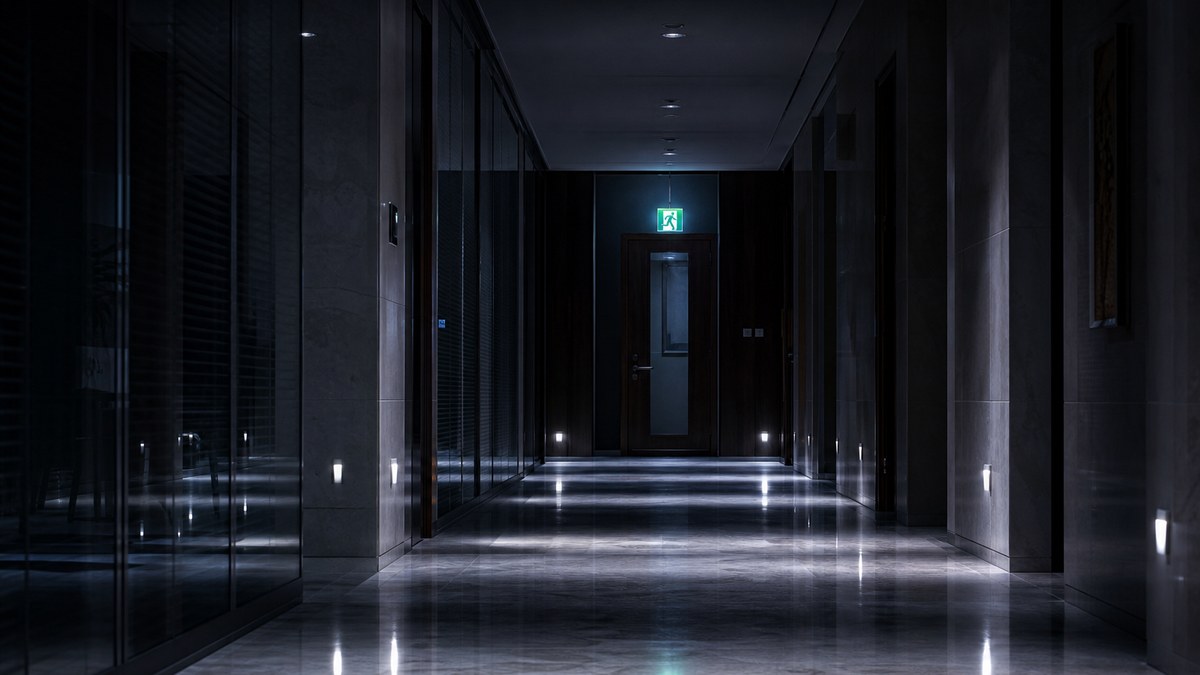
Emergency and egress lighting in Irving is the lighting nobody notices until the power goes out, and then it is the only lighting that matters. When a storm knocks out a feeder, a breaker trips, or a fire alarm sends everyone to the stairs, exit signs and emergency fixtures have to switch on automatically and light a continuous path out of the building. For offices in Las Colinas, hotels along the canals, warehouses near DFW Airport, data centers, restaurants and parking garages, that path is a code requirement, a fire inspection item and a real life-safety system.
This guide explains how emergency and egress lighting works in commercial buildings, what the model codes require, how the City of Irving enforces them, how to upgrade older systems to LED without creating compliance problems, how emergency lighting interacts with modern lighting controls, and how to test and document everything so inspections go smoothly. It is written for property managers, facility directors, building engineers, owners and design teams. It is general guidance, not a substitute for your engineer of record or the authority having jurisdiction.
Emergency and egress lighting keeps exit routes visible when normal power fails. Most commercial buildings in Irving need it along every required path of egress.
- Duration: the model codes call for at least 90 minutes of emergency illumination
- Light levels: an initial average of 1 foot-candle and a minimum of 0.1 foot-candle along the egress path, measured at the floor
- Uniformity: no more than a 40:1 maximum-to-minimum ratio
- Exit signs: listed to UL 924 and powered for the same duration
- Testing: a 30-second functional test every month and a full 90-minute test every year, with written records
- Local code: Irving enforces the 2021 International Fire Code
- Pricing: quoted per building after a site survey
What emergency and egress lighting actually means
The terms are often used interchangeably, but they describe different layers of the same system:
- Means of egress illumination is the normal lighting along exit routes while the building is occupied: corridors, stairs, aisles, ramps, lobbies and exit discharge areas. The codes set a minimum light level for these routes even when everything is working.
- Emergency illumination is the backup lighting that takes over automatically when normal power fails. It can come from battery units, fixtures with built-in battery packs, a central inverter or a generator.
- Exit signs mark the way to exits and must stay lit on emergency power.
- Exterior egress lighting covers the path from the exit door to a safe public way, which can include exterior stairs, landings and walkways.
A compliant building gets all four right. A common inspection finding is a building where the exit signs work perfectly but the corridor between them goes dark, or where an exterior door opens onto an unlit landing.
The codes that apply in Irving
Emergency lighting requirements come from several overlapping documents. Your design team and the authority having jurisdiction decide exactly which editions and sections apply to a given project, but these are the main ones:
| Code or standard | What it covers |
|---|---|
| International Fire Code (IFC) | Ongoing requirements for existing buildings, including maintaining and testing emergency lighting and exit signs. The City of Irving has adopted the 2021 edition. |
| International Building Code (IBC) | Means of egress illumination, emergency power for illumination and exit sign requirements for new construction and alterations. |
| NFPA 101 Life Safety Code | Detailed emergency lighting performance (duration, light levels, uniformity) and periodic testing. Referenced by many owners, insurers and health care accreditors. |
| National Electrical Code (NEC) Article 700 | Wiring, transfer, separation and testing of emergency systems. |
| UL 924 | Product safety standard for emergency lighting equipment, exit signs and emergency lighting control devices. |
| NFPA 110 / NFPA 111 | Generator and stored-energy (battery and inverter) emergency power systems. |
The City of Irving lists the 2021 International Fire Code as its adopted fire code and, like many Texas cities, has published proposed ordinances for moving to the 2024 International Codes. If you are planning a renovation, check the current adopted edition with the city before design starts. For the energy-code side of the same project, see our guide to lighting controls and energy code compliance in Irving.
Performance requirements in plain English
The core emergency illumination performance criteria are consistent across NFPA 101 and the IBC:
- 90 minutes. Emergency illumination must last at least one and a half hours after normal lighting fails.
- 1 foot-candle average, 0.1 minimum. At the start of the emergency period, the egress path needs an average of 1 foot-candle (about 10.8 lux) and at least 0.1 foot-candle (about 1.1 lux) at any point, measured at floor level.
- Allowed decline. By the end of 90 minutes, the average can drop to 0.6 foot-candle and the minimum to 0.06 foot-candle.
- 40:1 uniformity. The brightest point cannot be more than 40 times the dimmest point, which prevents a few bright spots with dark gaps in between.
- Automatic transfer. Emergency lighting must come on automatically, without anyone flipping a switch, when normal power is interrupted.
Two bright battery "frog eye" units at each end of a long corridor can meet the average light level on paper and still fail the minimum and the 40:1 ratio in the middle. Spacing and optics matter as much as total light output, which is why a photometric layout beats guesswork.
Where emergency lighting is required
Exact requirements depend on occupancy, occupant load and building configuration, but in commercial buildings emergency illumination is typically required along the full required means of egress, including:
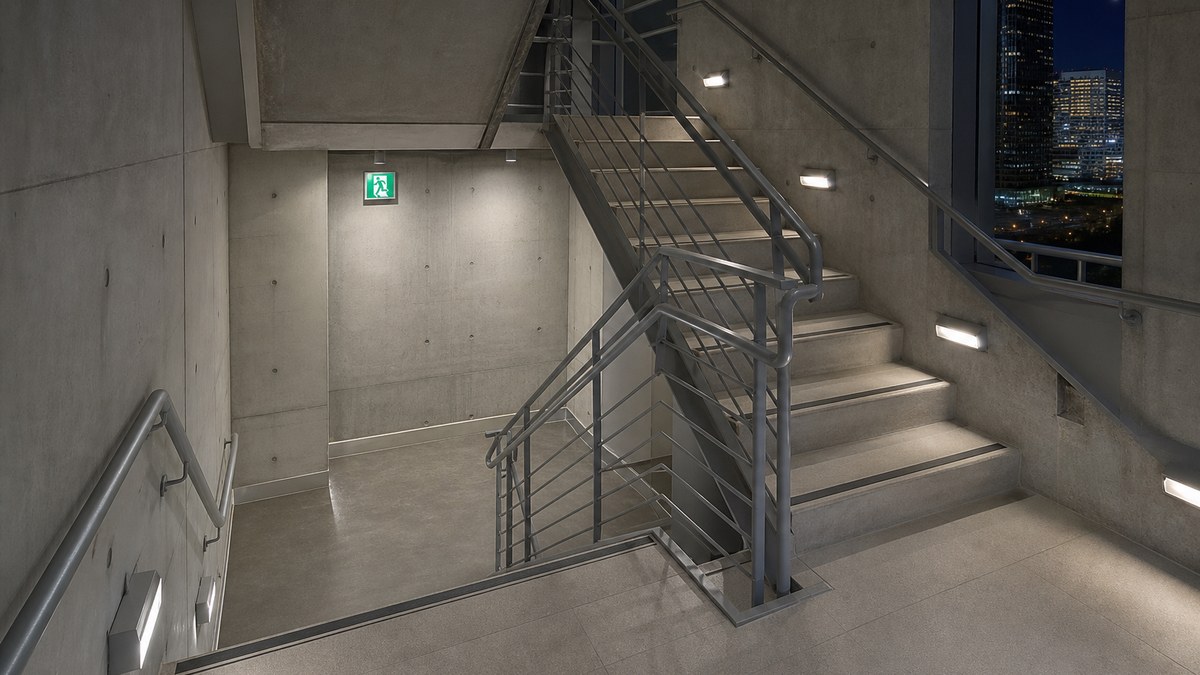
- Corridors, exit access stairways and ramps
- Rooms and spaces that require two or more exits, such as large open offices, conference centers, ballrooms and assembly areas
- Exit stairways, exit passageways and the exit discharge
- Exterior egress components such as elevated landings and exterior stairs
- Electrical rooms, fire command centers, fire pump rooms and generator rooms
- Larger public restrooms and other spaces the code identifies
Your design team confirms the list for each building. When in doubt, the fire marshal's office is the final word.
Emergency power options: batteries, inverters and generators
There are three common ways to power emergency lighting, and many larger properties use a mix:
| Option | How it works | Best fit | Trade-offs |
|---|---|---|---|
| Unit equipment (battery wall packs, combo exit/emergency units) | Self-contained battery and lamp heads that switch on when local power fails | Smaller buildings, back-of-house, retrofits | Simple, but many batteries to test and replace; visible fixtures |
| LED fixtures with integral emergency drivers | Normal architectural fixtures with a battery pack that runs the LED in emergency mode | Offices, lobbies, corridors, hotels where appearance matters | Blends into the ceiling; battery life and testing still per fixture |
| Central inverter | A central battery system that feeds designated normal fixtures during an outage | Mid-size and large buildings wanting one point of testing | Needs dedicated circuits and space; one system to maintain |
| Generator | Standby generator feeds emergency circuits through a transfer switch | Hotels, data centers, high-rises, facilities with other emergency loads | Startup time must be bridged or meet code; generator testing regime applies |
LED has changed the economics of all four. Emergency loads are much smaller than they were with fluorescent and incandescent fixtures, so a battery pack or inverter of the same size can power more fixtures, and generators carry less lighting load. The right choice depends on what the building already has, how it is maintained and how it looks. Data centers and other mission-critical sites are their own category; our data center lighting guide covers how emergency lighting fits with generator and UPS-backed systems.
Emergency lighting and lighting controls
This is where many modern upgrades go wrong. Energy codes require occupancy sensors, daylight dimming and automatic shutoff, but emergency lighting has to come on at full required output during a power failure no matter what state the controls are in. If an emergency fixture is dimmed to 20% by a daylight sensor, or switched off by a vacancy sensor, when normal power drops, it still has to light the egress path.
The usual solutions:
- UL 924 emergency lighting control devices. Often called bypass relays or automatic load control relays, these let normal controls operate an emergency fixture day to day and force it to full output when normal power fails.
- Emergency-capable dimming drivers and power packs. Products listed to sense loss of normal power and override a 0-10V or DALI dim signal.
- Networked controls with emergency integration. Some networked systems include listed emergency interfaces so emergency fixtures can participate in scenes and schedules.
- Dedicated unswitched circuits. Simple and reliable for night lights and stairwells, but it gives up some energy savings.
Stairwells are a special case: many energy codes allow stairwell lighting to dim when unoccupied, but egress light levels and emergency operation still apply. For a deeper look at control systems, see our guide to commercial lighting control systems in Irving.
Not sure your building would pass?
Tell us about your property and we will follow up to schedule a survey of exit signs, emergency fixtures and controls, with a project-specific proposal.
Upgrading older emergency lighting to LED
Many Irving buildings still have a patchwork of emergency equipment installed over decades of tenant improvements: old incandescent exit signs, fluorescent fixtures with aging ballast-type battery packs, and battery wall packs whose batteries have not been replaced in years. An LED upgrade is a good time to fix the whole system rather than swapping parts one by one.
What a good upgrade includes
- Survey and inventory. Map every exit sign, emergency fixture, battery unit, inverter, generator circuit and control device. Note what works, what fails and what is missing.
- Egress path review. Walk every exit route, including back-of-house corridors, stairs, exterior landings and the path to the public way.
- Photometric check. Confirm that emergency fixtures alone meet the light level and uniformity criteria along the path.
- Equipment selection. Choose listed LED exit signs, emergency drivers, unit equipment or an inverter based on the building and maintenance plan.
- Controls integration. Add UL 924 control devices or emergency-capable drivers wherever emergency fixtures are dimmed or switched.
- Permits and coordination. Coordinate with the electrical contractor, the engineer of record where required, and the city for permits and inspections.
- Commissioning. Test every unit on simulated power loss, verify controls override correctly and record the results.
- Documentation. Hand over an updated fixture schedule, test log template and as-built drawings.
Common retrofit mistakes
- Swapping fixtures without emergency drivers. Replacing a fluorescent troffer that had a battery pack with an LED troffer that does not quietly removes an emergency fixture from the egress path.
- Wiring emergency fixtures to sensors. New occupancy sensors that switch emergency fixtures off without an override device.
- Ignoring the minimum. Meeting the average light level while leaving dark spots between fixtures.
- Forgetting exterior doors. No emergency light outside exit discharge doors, or a wall pack that is not on emergency power.
- Mixing incompatible parts. Using an emergency driver or power pack that is not rated for the LED fixture it is paired with.
Budget is always part of the conversation. Our guide to affordable commercial LED upgrades in Irving covers how to phase work so the life-safety items come first.
Testing, inspection and record-keeping
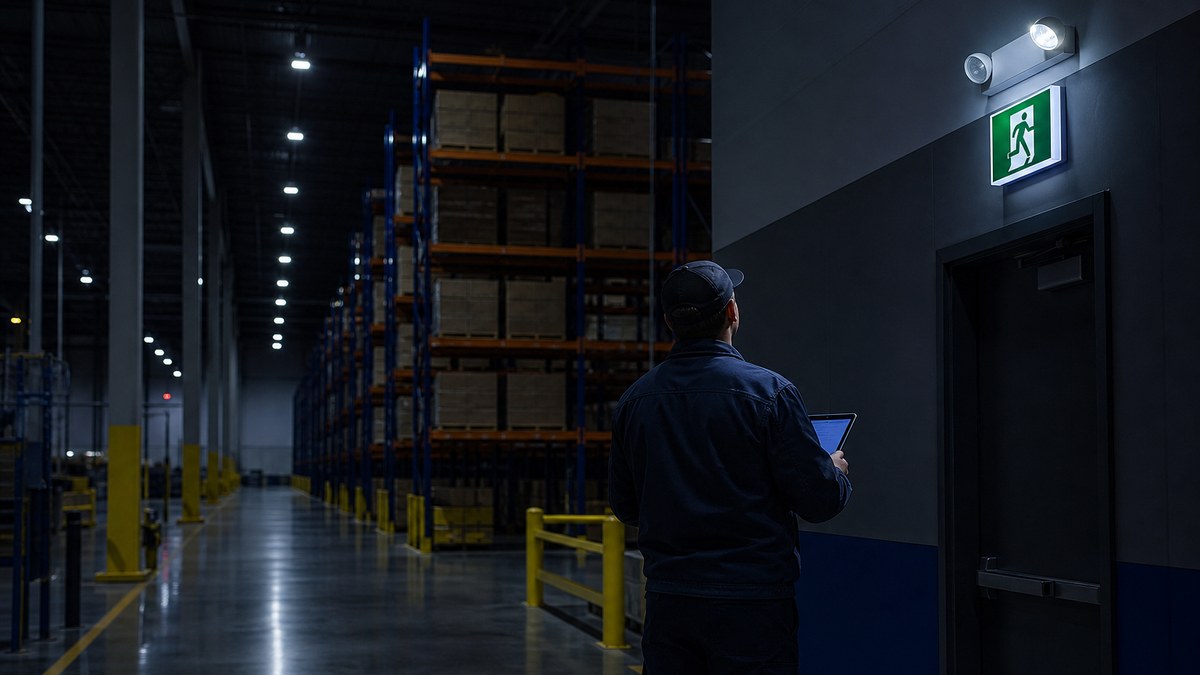
Emergency lighting that is installed correctly can still fail when it is needed if batteries age out or a unit is damaged. That is why the codes require periodic testing:
| Interval | Test | What to record |
|---|---|---|
| Monthly | Functional test of at least 30 seconds on emergency power | Date, units tested, pass/fail, who tested, corrective action |
| Annually | Full 90-minute duration test for battery-powered equipment | Date, duration achieved, failures, battery replacements |
| Per manufacturer | Battery replacement and cleaning of lenses and heads | Battery dates and model numbers |
| Per NFPA 110 | Generator exercise and load testing where generators supply emergency lighting | Run time, load, transfer performance |
Written records must be kept and available for the fire inspector. In Irving, fire protection service providers file inspection and test reports through The Compliance Engine; your fire inspector or service provider can confirm what applies to your emergency lighting and exit signs.
Self-testing and remote monitoring
Monthly testing of hundreds of units by hand is time consuming, especially on a multi-building campus. Self-diagnostic emergency units and drivers run their own monthly and annual tests and flag failures with an indicator light. Networked emergency monitoring goes further, logging every test automatically and producing reports, which suits hotels, large offices and warehouses. Your inspector decides whether automated records are acceptable, so confirm before relying on them.
Emergency lighting by building type
Class A offices and corporate campuses
Large open floors, multiple exit stairs and frequent tenant reconfigurations mean emergency lighting has to be revisited after every build-out. Integral emergency drivers in architectural fixtures keep ceilings clean. See our guide to Class A office lighting upgrades in Irving.
Hotels
Guest corridors, stairs, ballrooms, pre-function areas and back-of-house all need egress coverage, and guests are unfamiliar with the building. Ballroom scenes and dimming must override to full emergency output. Our hotel lighting guide covers the front-of-house side.
Warehouses and distribution centers
High ceilings, long aisles and racking that changes over time make uniformity a challenge. High-bay fixtures with emergency drivers, plus exit signs visible above racking, are typical. See warehouse and logistics lighting near DFW Airport.
Restaurants, bars and entertainment venues
Assembly spaces often run very low ambient light levels for atmosphere, so emergency lighting and exit signs carry more weight. Stage and DMX systems should be coordinated so a power failure or fire alarm brings up egress lighting. Read our restaurant and entertainment lighting guide.
Parking garages
Stairs, elevator lobbies and pedestrian routes inside structured parking need emergency coverage, and fixtures must handle heat, humidity and vehicle exhaust. Our parking garage LED lighting guide covers the details.
Data centers and mission-critical facilities
White space, electrical rooms and generator yards need emergency lighting that works alongside UPS and generator systems, plus clear egress through containment aisles.
Exterior egress and site lighting
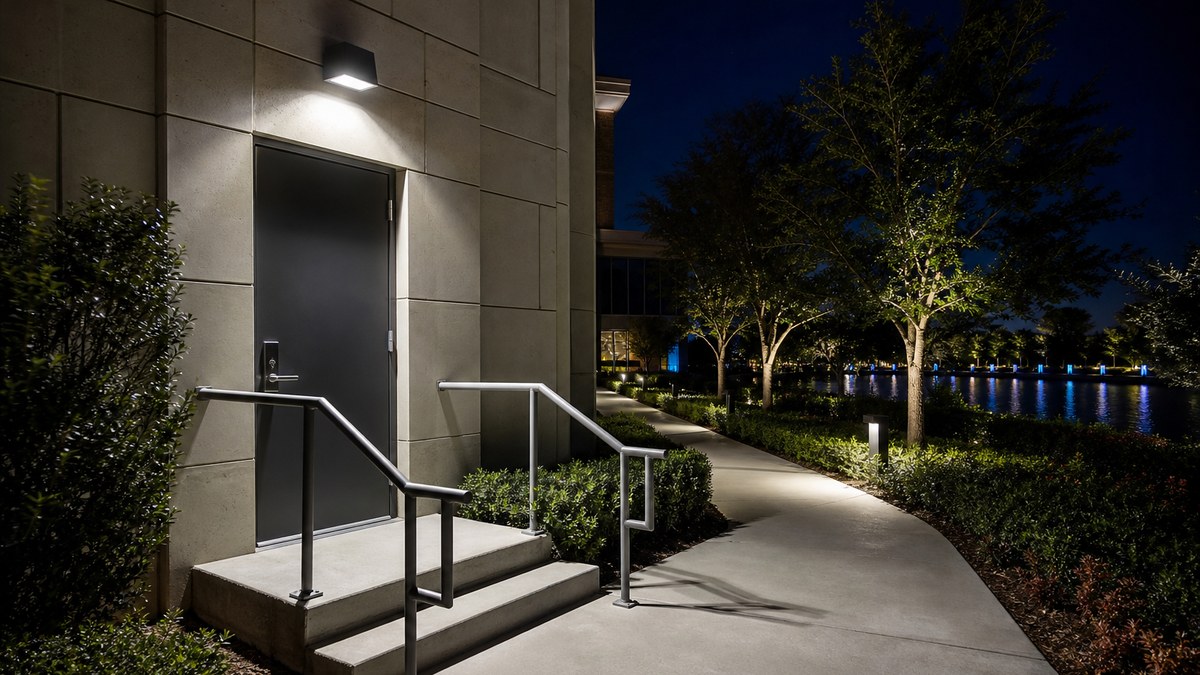
The path out does not end at the exit door. Exit discharge areas, exterior stairs and walkways to the public way need adequate light, and on many buildings at least the area right outside each exit needs emergency power. Exterior wall packs with emergency battery backup, or site lighting on generator circuits, are common solutions. Coordinate this with facade and parking lot lighting so the site looks consistent; see our guides to commercial outdoor LED lighting in Irving and commercial landscape lighting.
Exit signs and video walls, signage and displays
Lobbies with large LED video walls, digital signage and dramatic architectural lighting need careful planning so exit signs stay visible and are not visually lost against bright content. Placement, mounting height and sightlines should be reviewed during design. Our LED video walls guide and the video wall services page cover display planning.
Planning an emergency lighting project with Irving LED Lights
We design, supply, install, program and service commercial lighting across Irving, Las Colinas, Valley Ranch and the DFW Airport corridor, and emergency and egress lighting is part of every interior and exterior scope we deliver. Our team brings 15+ years as an authorized architectural lighting dealer and project coordinator. Our licensed installation partner has completed over 200 major sports and commercial projects across the US and Canada — NFL, NBA, NHL, MLS, NCAA and NASCAR.
Typical engagements include standalone emergency lighting surveys, exit sign and emergency fixture upgrades, LED retrofits with emergency drivers and UL 924 control devices, and full building lighting projects through our Luminance design-build program. Learn more about our team, browse our commercial lighting services, or check the areas we serve. For a broader overview of the local market, read what Las Colinas businesses need to know about commercial LED lighting.
Frequently Asked Questions
How long must emergency lighting last in a commercial building?
How bright does emergency egress lighting need to be?
How often do emergency lights and exit signs have to be tested?
Which fire code does the City of Irving use?
Can emergency lights be on occupancy sensors or dimmers?
Do LED fixtures need separate emergency battery units?
What is UL 924?
How much does an emergency lighting upgrade cost in Irving?
Are self-testing emergency lights allowed?
What areas do you serve?
Keep every exit route lit
Request a consultation and we will follow up to schedule an emergency and egress lighting survey for your building.
Related
Our DFW lighting network: Dallas commercial LED lighting, Fort Worth LED lighting, Arlington LED lighting, Plano LED lighting, statewide Texas LED lighting, wholesale LED components, fiber optic starlight ceilings, 360° laser fiber optic lighting, LED signage, modular building solutions, and Dallas modular structures. More guides on the Irving LED Lights blog, or see all services.